Get AI Briefings, Transcripts & Alerts on Local & National Government Meetings — Forever.
Council approves Technology Park overlay; rezones Avamore PUD, removes planned residential
Loading...
Summary
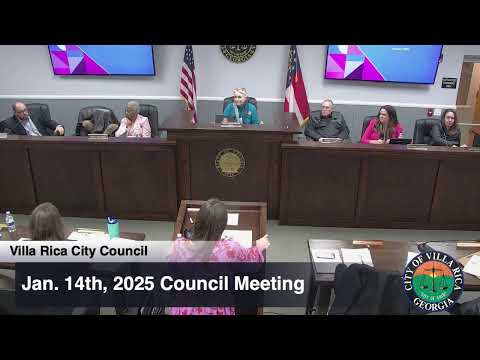
After several hours of public comment and questions from council, Villa Rica officials adopted a new Technology Park overlay and approved the Avamore planned-unit development rezoning and two annexations, subject to conditions that the PUD conform to the overlay and that previously approved residential units be removed.
Villa Rica’s City Council approved a text amendment creating a Technology Park overlay district and then voted to rezone and annex the Avamore property into an amended planned-unit development subject to that overlay.
The council adopted the overlay – language that defines permitted technology-oriented uses, new lot and buffering standards, noise and lighting rules and minimum lot sizes – by a 4-1 vote after a staff presentation by Interim City Manager Diana DiSanto. DiSanto told the council the overlay is intended “to promote the development of technology centers in areas of the city where existing or proposed infrastructure could adequately support the proposed uses.”
The vote on the Avamore rezoning followed. The applicant had owned an earlier Avamore PUD approval that allowed housing and mixed uses; the new application would bring roughly 204.5 acres (plus an additional 35.03-acre parcel included in an amended request) into the city and add industrial / technology-type uses to the PUD. Attorney Joe Fallon and owner Mike Embry told the council the project would be phased and that the developer intended to pursue technology-campus uses rather than additional housing. “If you approve the rezoning, adding in the lot industrial, we also ask you to authorize the annexation,” Fallon told the council. Embry said, “If I get the commitment from the city to do what we need to do with the technology park overlay, we will make the commitment also.”
Residents who live near the project area along South Van Wert Road and Hickory Level Road strongly objected during the public hearings. Speakers cited traffic, noise, water and wastewater concerns and the potential environmental impacts of industrial uses. Resident Dan Krisner said he had heard the proposal described as a “done deal” and urged council to scrutinize the plan. Paul Cutler and Susan Crane urged the council to protect nearby neighborhoods and questioned infrastructure capacity. Others asked whether the overlay would permit heavy manufacturing or battery plants; staff and the applicant emphasized that the overlay is designed to limit certain industrial activities and that any detailed site plan would come back for review and public comment.
Council members pressed staff and the applicant about what would remain in the revised PUD and how the overlay and future site plan reviews would protect neighbors. Planning staff reminded the council that site-specific design standards, buffers, parking, and noise rules in the overlay and the zoning ordinance would apply and that a development agreement must address sewer capacity and conveyance.
Final actions: council amended the Avamore PUD to add the industrial/technology uses, made the PUD subject to the newly adopted Technology Park overlay district, and required removal of all previously approved residential units as a condition of the rezoning. The rezoning and the two related annexation ordinances were approved unanimously. The Technology Park text amendment had passed earlier in the meeting by a 4-1 vote.
Why it matters: The overlay and the Avamore rezoning together change the range of uses that could go on a large tract of land on Villareca’s south side. Supporters argued the change advances higher-paying employment and reduces potential residential pressure on schools; opponents warned of noise, traffic, water demand, and industrial runoff risks.
What’s next: The developer must return with detailed site and infrastructure plans consistent with the overlay’s requirements and a development agreement addressing sewer capacity and other conditions; those plans will be subject to public hearings and staff review.