Get Full Government Meeting Transcripts, Videos, & Alerts Forever!
Get email alerts on the Student Fees Parking topic
No spam. Unsubscribe anytime.
Students, activists urge Chickasha board to repeal $20 parking pass fee
Summary
Several Chickasha High School students and a regional Young Americans for Liberty leader told the Board of Education the $20 student parking pass is an undue burden and urged repeal or replacement with voluntary fundraisers; speakers said the district is financially healthy but the fee harms low-income students.
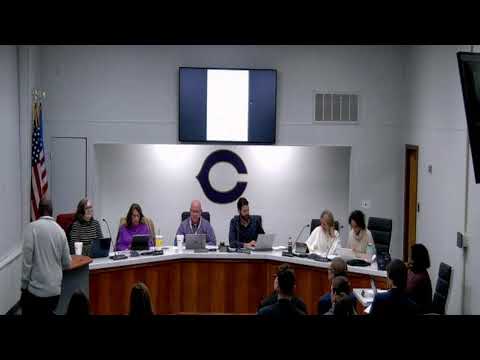
Several students and a Young Americans for Liberty organizer asked the Chickasha Board of Education on Monday to repeal the Chickasha High School student parking pass fee, saying it creates a financial burden for some families.
The appeals came during public comment before the board’s discussion of later agenda items. Trenton Rippey, South Regional director for Young Americans for Liberty, told the board, “we don't believe that students should have to pay to go to school.” He said his organization has issued a letter to the district and offered to sponsor a public debate over the policy.
The testimony included multiple current and former students describing how the $20 fee affects low-income families. Isaac Pennington, who identified himself as a previous student, said he comes from a lower-income family and that classmates “hated the parking pass. They hated how they had to deal with it. They hated, I'm paying $20 to be here.” Another student speaker, Jesse McLaren, a Chickasha High junior, said the fee can leave students short of money for food: one friend, he said, “gets $20 for gas every single week… the rest of it's for his lunch.”
Student speakers and parents urged the board to consider voluntary fundraisers as an alternative. Trenton Shaden, a student commenter, said many drivers do not see a benefit from the fee because they are not assigned specific spaces and still must compete for parking. Tyler Williams, who addressed the financial logic behind the fee, estimated that fewer than half of students drive and said revenue from the passes would be small relative to program budgets.
Board members did not take immediate action on the parking-pass policy during the public-comment period. The board’s agenda later included other business items and a pilot memorandum of understanding for an assessment platform; no vote on the parking-pass fee was recorded in the transcript.
The speakers repeatedly framed the issue as one of equity and student need rather than district finances. Rippey noted the district’s favorable audit results presented earlier in the meeting and suggested the fee is unnecessary. Several students urged the board to repeal the fee for the next school year or replace it with fundraising options run by student groups or booster organizations.
No formal motion or staff action to change the parking-pass policy was recorded on the transcript; public comments were presented to the board for consideration.
Local advocates and students said they will continue to attend future meetings to press the issue and offered to cooperate on alternative fundraising approaches.