Get Full Government Meeting Transcripts, Videos, & Alerts Forever!
Get email alerts on the Employee Compensation topic
No spam. Unsubscribe anytime.
Lincoln council debates longevity pay for nonunion employees; discussion to continue
Summary
At a Jan. 14 Committee of the Whole meeting, Alderman Bateman proposed changing longevity pay for nonunion staff — recommending a 4% across-the-board raise plus a 2% longevity schedule tied to base pay — prompting a wide discussion about department authority, budget impacts and next steps. No formal vote was taken.
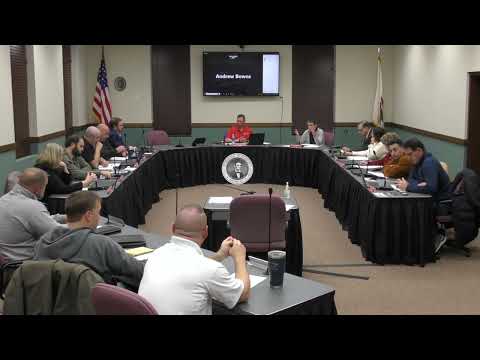
Alderman Bateman opened a Committee of the Whole discussion on Jan. 14, 2025 about establishing longevity pay for nonunion city employees, proposing that current nonunion staff receive the same 4% annual increase the unions negotiated plus a 2% longevity payment tied to employees’ base salaries at milestone years. "I'm not trying to or want to change any current employees' pay at all," Alderman Bateman said, adding that his proposal was intended to set a framework for future hires and to avoid budget strains over time.
The proposal grew out of repeated budget conversations and concern that some longevity schedules in existing union contracts — which include multiple milestone increases — could be financially unsustainable for the city over the long term. Bateman described his recommendation as a two-part approach: match the union-negotiated 4% across-the-board annual increase and add a 2% longevity payment calculated on each employee’s base salary at milestone years such as four and seven years of service.
Supporters of a department-driven approach urged the council to rely on department heads to recommend salaries for individual employees. Deputy Chief Comstock said department supervisors know job tasks and training levels and can provide targeted recommendations: "...we individually do our own department budgets and we're the ones that work with those people hand in hand every day." Treasurer Acanzo likewise recommended that supervisors present proposed pay levels to the budget committee for review and that the council retain final approval.
Council members pressed for clarity on how a base salary would be defined for future hires and how longevity would compound over time. Bateman used two examples he prepared: one employee with a reported base salary of $43,750.40 and another at $48,072.80; in his illustrations the 4% and the proposed 2% longevity amounts were calculated on those base figures. He emphasized his intent to protect current employees from any retroactive changes while establishing a different structure for new hires going forward.
The discussion also included alternatives such as establishing salary ranges or resume-building incentives (training, certifications) that could be tied to pay increases. Several council members and department heads said they would prefer a process in which department managers submit justification for individual raises and the budget committee reviews those proposals before council action.
There was no motion to adopt a new policy at the meeting. Alderman Bateman asked for the matter to be revisited in a future Committee of the Whole to refine specifics and produce a proposal the council could vote on during budget deliberations.
The committee did not take a formal vote on a longevity policy during the Jan. 14 meeting; council members agreed to return the topic for further development.