Get Full Government Meeting Transcripts, Videos, & Alerts Forever!
Get email alerts on the Broadband topic
No spam. Unsubscribe anytime.
Fiscal Court refers broadband funding decision to Broadband Committee amid BEAD opportunity
Summary
Lewis County Fiscal Court voted to send consideration of using an Appalachian Regional Commission grant as match for the federal BEAD program to its Broadband Committee, after hearing options from a county broadband consultant and discussion of trade-offs between a seven‑year 'broadband as a service' model and using ARC funds as match for BEAD.
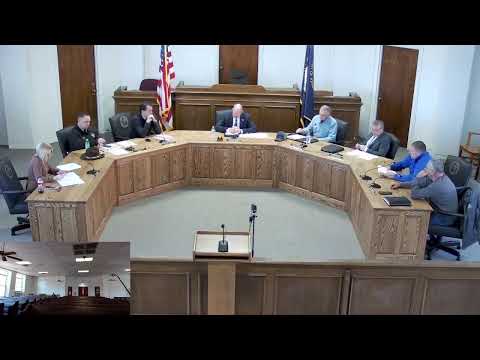
Lewis County Fiscal Court on Jan. 13 voted to refer a proposal to the court’s Broadband Committee to decide whether to change the scope of a previously awarded Appalachian Regional Commission (ARC) broadband grant so the county’s ARC funds could be used as matching funds for the federal BEAD program.
The motion to send the matter to the Broadband Committee passed unanimously after county consultants outlined two options: keep the ARC award as a seven‑year “broadband as a service” fund or repurpose the ARC award as match to help internet service providers apply for Broadband Equity, Access, and Deployment (BEAD) funds when the state application window opens.
Christy Dodge, who addressed the court about the ARC award and broadband options, said ARC had initially required the applicant to own infrastructure but later allowed “broadband as a service,” a structure that pays an internet service provider over several years and carries ongoing federal compliance requirements. Dodge told the court that ARC recently confirmed the county could change the ARC grant scope so the county’s funds could serve as match to BEAD awards.
Dodge said the county’s ARC award in question is about $800,000 with a $200,000 local match previously contemplated. Under BEAD rules, she said, providers can request up to 50% of project cost from BEAD and must provide the remaining 50% as match; ARC funds could be applied to that provider match to reduce the provider’s out‑of‑pocket share and potentially encourage larger or more competitive BEAD applications.
Dodge and others warned that keeping the ARC funds as broadband as a service would likely cover only a small number of households directly with county‑run payments — the broadband committee’s earlier estimate was in the low tens of households (roughly “10 to 25” in discussion) because most “easy” service areas already have coverage. She described broadband as a service as a seven‑year payout that some for‑profit internet service providers have been reluctant to bid on because of the long compliance period.
Magistrate Woody Underwood moved to refer the question to the Broadband Committee and to support the committee’s recommendation; Mark Horsley seconded the motion. The court voted unanimously to send the decision to the committee so members can review details and return a recommendation. The motion followed advice from ARC staff that changing the scope of the ARC award would not require voiding the grant agreement and that the county was “not too far behind the ball” to act before the BEAD application window.
The court and Dodge said timing favors an expedited review because the state BEAD application round for providers opens Jan. 15. Dodge recommended the Broadband Committee evaluate whether using ARC funds as provider match would allow the county to extend service to more households and better leverage state and federal funds; she said the approach could “spread the money across the board a little bit more.”
The court asked that the Broadband Committee meet quickly and report back; no change to the ARC grant was made at the meeting. The referral gives the committee the authority to analyze options and recommend whether the Fiscal Court should request a scope change from ARC so the county’s ARC funds could be used as match for BEAD applications.
If the committee recommends using ARC funds as match and the court approves, the next steps would be to request a scope change from ARC and coordinate with potential internet service providers preparing BEAD applications. Dodge said the county has already done household mapping to identify unserved and underserved areas, and that mapping would guide which provider proposals get the most leverage from combined BEAD and ARC match funding.
The court’s vote to refer the question does not commit Lewis County to any particular procurement or contract model; that final decision would come after the Broadband Committee reports back and the Fiscal Court acts on its recommendation.