Get Full Government Meeting Transcripts, Videos, & Alerts Forever!
Get email alerts on the Jury Selection topic
No spam. Unsubscribe anytime.
Jury selection begins in State v. Dominique Nicholson; Judge Boyd and attorneys test jurors on bias and burden of proof
Summary
Jury selection started in State v. Dominique Nicholson in the 187th District Court; Judge Stephanie Boyd and counsel questioned prospective jurors on bias, burden of proof and logistical constraints.
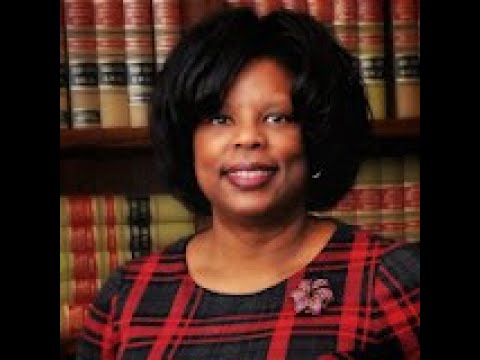
Jury selection began in the 187th District Court on the case State of Texas v. Dominique Nicholson, cause no. 2022 CR 11860, with Judge Stephanie Boyd presiding and prosecutors Ashley Jones and Alexandria Valdez and defense attorneys Lorraine Efren and Renee Munoz participating.
Judge Stephanie Boyd opened with instructions on courtroom procedure and recordkeeping, saying, "I'm Judge Boyd. You're in the 187 District Court on the 4th floor." The judge explained jurors must speak audibly for the court reporter and reviewed basic rights and burdens: presumption of innocence, the right to remain silent, and the state's burden of proof beyond a reasonable doubt.
State prosecutors and defense examined jurors on potential bias, fairness, and practical constraints. The state attorney told jurors, "The burden of proof in any criminal case is beyond a reasonable doubt," and asked whether anyone would require 100 percent proof; a subset of prospective jurors indicated they would. The court and counsel also discussed witness credibility, evidence types (surveillance video, witnesses, physical evidence), and defenses including self-defense and the legal standard for justification in Texas.
Prospective jurors reported logistical conflicts and language needs during voir dire. The court recorded travel or time constraints from multiple jurors (juror numbers called on the record included 11, 12, 13, 16, 19, 31, 40, 41, 42, 46, 52, 53 and 64) and identified prospective jurors whose first language was not English (juror numbers listed on the record included 15, 16, 23, 28, 37, 38, 39 and 40). Several jurors privately indicated prior victimization or experience with family violence; on the record the judge noted juror numbers who raised those experiences and asked whether any could not be fair and impartial because of them.
The court explained the two phases of a criminal trial in Texas (guilt/innocence and, if guilty, punishment) and noted Nicholson had elected to have the court decide punishment if convicted. The charges identified for jurors were aggravated assault with a deadly weapon (count 1) and felon in possession of a weapon (count 2); voir dire addressed the elements prosecutors must prove and what kinds of evidence jurors might expect.
Judge Boyd and counsel emphasized jurors’ role as the sole judges of witness credibility and the weight of evidence, reminding them that each juror must decide for themselves and that jury deliberations must be free from intimidation. The court expected the trial to run into Friday and instructed jurors to remain available and return by 4:40 p.m. when excused to wait in the hallway.
Ending: Voir dire continued after the panel left the courtroom; the court adjoined with all prospective jurors instructed to remain in the courthouse and return as ordered.