Get Full Government Meeting Transcripts, Videos, & Alerts Forever!
Get email alerts on the Open Enrollment topic
No spam. Unsubscribe anytime.
Board approves open‑enrollment plan; general education open, special education closed for 2025–26
Summary
After a data presentation, the Burlington Area School District board voted to approve the district’s open‑enrollment plan for 2025–26. The board left general education seats open without a district‑set cap and closed special‑education open enrollment because current caseloads exceed recommended levels.
Director Wines presented the district’s annual open‑enrollment report and recommended the board approve the open‑enrollment plan for the 2025–26 school year. The report used December 27 enrollment extracts and showed a modest net increase in open‑enrolled students compared with last year, with a noted uptick in 4K incoming open enrollments.
Director Wines said the district counted 133 open‑enrolled students as of Dec. 27 and reviewed where students were enrolling out of Burlington and where the district was accepting enrollments. He told the board the district continues outreach to attract families and attributes some enrollment movement to last year’s referendum failing and to proximity of neighboring districts.
School business manager Ruth clarified the financial picture: the district pays open‑enrollment tuition out to other districts but also receives revenue in its revenue limit that offsets those payments. "We have the revenue in the revenue limit to cover that payment," Ruth said, explaining that payment‑out figures (about $4.04 million in the presentation) are smaller than the revenue the district generates in the revenue limit for those same students (about $4.8 million), producing a net positive on that metric.
Board members discussed reasons families open‑enroll out — proximity to other elementary schools, work locations, and program availability — and asked for a map of where leaving families live. Director Wines said he could provide a map showing neighborhoods and receiving districts.
Building capacity and class sizes were discussed in detail. Board members and administrators reviewed projected enrollment, building capacities and available seats by school. Administrators noted Karcher Middle School has a large cohort of fifth graders this year and is tighter than other buildings; kindergarten and fifth‑grade class sizes in some buildings were flagged as high. The district said it will place incoming open‑enrolled students to balance class sizes across schools where possible.
Administrators told the board that special‑education caseloads are higher than recommended levels and that all special‑education open‑enrollment requests will be closed for the coming school year. The district will re‑examine special‑education openings after the end‑of‑year IEP reviews and as staffing changes allow.
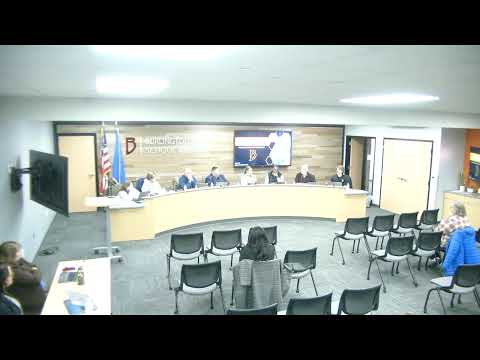
After discussion, a board member moved to approve the open‑enrollment plan as presented; another board member seconded, and the board approved the plan by voice vote. "All those in favor say aye," the chair said; the minutes record "Motion carries." The motion included the district position that general education seats will remain open without a district‑set cap for 2025–26, while special‑education open enrollment will be closed pending caseload review.
The board did not set a numeric seat limit for general education. Administrators noted that if substantially more students sought to open‑enroll in than out, the district would evaluate staffing and class size and could need to hire additional staff; the revenue associated with additional ins would accompany the students but would not change the district’s revenue‑limit base.
No further votes were taken on the item; the board adopted the plan as presented.