Get Full Government Meeting Transcripts, Videos, & Alerts Forever!
Get email alerts on the Police Accountability topic
No spam. Unsubscribe anytime.
Lampasas police present annual racial-profiling report: 4,061 traffic stops, 161 searches; no complaints reported
Summary
Chief Cummings presented the Lampasas Police Department's annual racial-profiling report to council, summarizing 4,061 traffic stops in the year, a small number of searches and one use-of-force incident tied to traffic enforcement; the department reported zero racial-profiling complaints for the year.
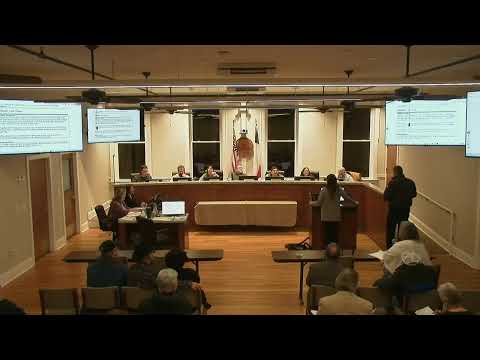
Lampasas Police Chief Cummings presented the department’s annual racial-profiling report to the City Council on Jan. 13, reporting 4,061 traffic stops in the year and providing a breakdown of stop outcomes and demographic data.
Chief Cummings told council the department conducted 4,061 traffic stops, performed 161 searches and found contraband in 87 of those searches. Officers issued 2,881 warnings and 1,022 citations and made 91 arrests stemming from traffic stops. Physical force was used in one traffic-stop-related arrest. Cummings said the department received zero racial-profiling complaints during the reporting year and that the department has submitted its required annual report to the state.
On demographics, the department’s analysis showed persons identified as white (non-Hispanic) accounted for roughly 67% of identified stops, Hispanic drivers about 24%, Black/African American drivers nearly 6%, Asian/Pacific Islander 2.39% and American Indian/Alaskan Native roughly 0.3% (figures provided in the department’s packet and explained in Cummings’ presentation). Chief Cummings also described an internal auditing practice: the records clerk reviews stop data daily, weekly and monthly for data-entry errors or irregularities and staff re-run and audit reports before the annual submission.
Council members asked clarifying questions about the stop counts and whether the number represented every traffic stop (warnings and citations). Cummings confirmed that the count includes warnings (written and verbal) and citations, with only limited exceptions (for example, if an officer is called away on an emergency before completing documentation).
The presentation was informational; council did not take a formal action beyond receiving the report. Chief Cummings invited council members to ask questions at any time and recommended outside review if the council wished further independent analysis.
No policy change or disciplinary action was proposed at the meeting; the report was transmitted to the state as required by law and placed on the council’s packet for local transparency.