Get Full Government Meeting Transcripts, Videos, & Alerts Forever!
Get email alerts on the School Based Mental Health topic
No spam. Unsubscribe anytime.
Farmington to pilot school-based mental health center at Farmington High School
Summary
The Farmington Board heard a proposal to pilot an on-site, insurance-funded mental health clinic at Farmington High School operated by Connecticut Behavioral Health to increase access to clinical therapy for students; no district funding required and rollout would start at the high school as a pilot.
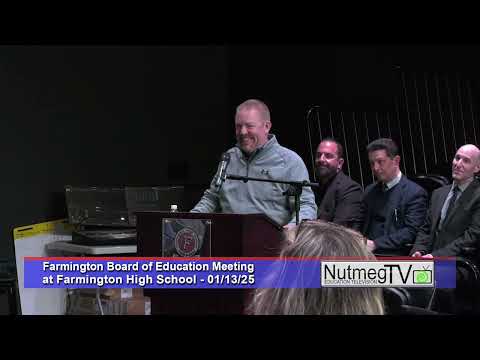
Farmington Board of Education members on Jan. 13 heard a proposal to pilot a school-based mental health center at Farmington High School (FHS) that would be run by Connecticut Behavioral Health and billed to families’ insurance, officials said.
The proposal would colocate licensed clinicians on the FHS campus to provide individual clinical therapy, coordinate care with school staff and offer summer and after-school availability. Director of Special Services Wendy Sheppard Vanish said the goal is to reach students who face “deep and clinical” needs that school counselors and social workers are not staffed to treat long term. She told the board that national and state data show rising youth mental-health needs and that many families face barriers to outside care.
Principal Russ Crist described increased complexity of students’ needs since the COVID-19 pandemic and said the high school’s counseling team asked administration for additional clinical support. Dr. Loss, representing Connecticut Behavioral Health (CBH), explained that CBH places clinicians inside schools, manages insurance billing and coordinates intake and paperwork, and that services are accepted under commercial and state insurance (including Husky). Clinical director Ben Handel said CBH has existing school partnerships in Connecticut and typically manages scheduling, intake and clinician assignment from a central office.
Board members asked about potential impacts on instruction and confidentiality. CBH said clinicians and district staff will coordinate schedules to minimize class time missed and use general calls to pull students so therapy visits are not labeled in school logs; intake requires parental consent except in rare emergency cases. CBH said clinicians can provide telehealth for parent involvement and can accept uninsured families via internal funding or charity mechanisms so “we're never gonna say to somebody, sorry. You don't have insurance.”
Board members sought clarification on whether the pilot would be limited to high school students. The district and CBH described the FHS rollout as a pilot to test processes, with the intention to expand services districtwide later if the model proves feasible. The district will draft a memorandum of agreement defining space, confidentiality and coordination, and will notify the FHS community about service availability if the board proceeds.
Nut graf: The proposed pilot aims to reduce barriers to clinical therapy by offering on-site licensed clinicians who bill insurance, a model district staff say could reach students who currently lack timely access to outside care; the program would not require direct district funding but would require space and coordination from the school.
Discussion only: board members praised the proposal but did not vote on any authorization or contract during the meeting. Next steps described by staff were (1) identify and allocate space at FHS, (2) draft a memorandum of agreement with CBH, and (3) circulate program information to families and FHS stakeholders.
Quotes used in this report come from the meeting transcript and are attributed to people who spoke there: Director of Special Services Wendy Sheppard Vanish; Principal Russ Crist; Dr. Loss (Connecticut Behavioral Health); Ben Handel (CBH clinical director). Ending: District officials said they will return to the board with a memorandum of agreement and program details before services begin and will evaluate the pilot before expanding to other schools.