Get Full Government Meeting Transcripts, Videos, & Alerts Forever!
Get email alerts on the Amusement Fee topic
No spam. Unsubscribe anytime.
Sunbury hears public split on changing $100 amusement-machine fee to percentage-based tax
Summary
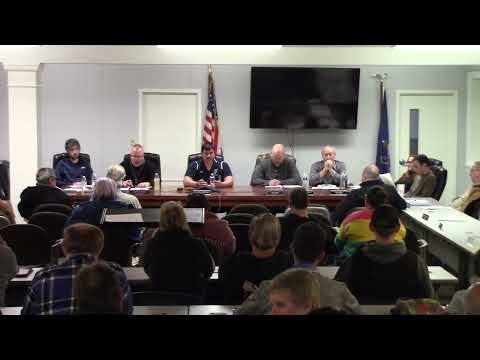
Sunbury City Council held a public work session on an amusement-fee ordinance that would replace a longstanding $100-per-machine license with a percentage-based fee; speakers debated enforcement gaps, who benefits from new revenue, and pending state action that could supersede local rules.
Councilman Bornhart opened a Sunbury City work session on the amusement-fee ordinance and urged input on whether the city should move from a flat $100 annual license per machine to a percentage-based fee designated for events and downtown promotion.
The discussion centered on two linked questions: whether the city can and should enforce existing license rules it has historically failed to collect, and whether a switch to a percentage-based tax (proposals discussed at the meeting referred to 4% locally) would better fund events, tourism or services such as fire-company consolidation.
"When you take this amusement fee, use it for what it's supposed to be used for. Put it back into drawing people back into your city," Councilman Bornhart said, citing examples of Hershey and Bloomsburg as municipalities that reinvest such revenue into local promotion.
Several business owners and operators said enforcement and fairness are immediate concerns. "We have one machine. We pay our $100. How is that being enforced?" said Erica, a business owner who addressed the council during public comment. She and other speakers said the city should ensure it is collecting existing fees consistently before adding new ones.
Laurie Johnson, who said she organized Sunbury’s New Year's Eve event, urged the council to prioritize collecting other uncollected fees and to support volunteer groups that run events. "We're not collecting money for sidewalks that were supposed to be put in," Johnson said, adding that volunteer capacity to run events is limited.
Business and supplier representatives warned about unintended consequences from a higher or percentage-based charge. "I'm not against regulation or taxation as long as it's done properly," said Dave Schulte, who identified himself as a supplier of Pennsylvania skill games. He and other operators urged careful data collection and cautioned that machines and their revenues vary widely.
Speakers and several council members noted a separate policy risk: state-level proposals discussed publicly could tax skill-game revenue at higher rates and standardize regulation. Julie Burgess summarized a recent report that "Republican and Democratic state senators sent a memo ... looking into taxing the games for the first time at a 16% rate and requiring state licenses to operate the terminals." Several participants said a future state law could preempt or change local options and local shares.
Council staff reported progress on enforcement steps the council requested earlier: code officers and police have updated a spreadsheet inventory of machines, and the city counted about 130 machines "that we know of." The city also noted it will send notices to businesses that owe license fees and is creating a system to track payments.
The council and commenters outlined possible uses for any new or better-enforced revenue: promoting downtown events, funding a downtown manager through a blueprint-community program, improving lighting, and supporting fire-company consolidation. Some residents and operators pushed back on designating funds away from volunteer fire companies that receive proceeds from machines and clubs.
No vote or formal change to the ordinance was taken during the session. Council members said the meeting was intended to gather public input and technical background so the council can decide whether to pursue an updated ordinance, further enforcement of existing code, or a different short-term increase to the flat fee.
"We can't wait on the state to make a decision for us," Councilman Bornhart said, while also acknowledging the city can revisit its choices if state legislation moves forward.
The council indicated it will continue fact-finding: confirm the annual totals the city currently collects, refine enforcement procedures, and model revenue options before drafting ordinance language for a future meeting.