Get Full Government Meeting Transcripts, Videos, & Alerts Forever!
Get email alerts on the Property Tax Opt Out topic
No spam. Unsubscribe anytime.
Vermillion School Board approves $880,000-per-year tax opt-out for five years
Summary
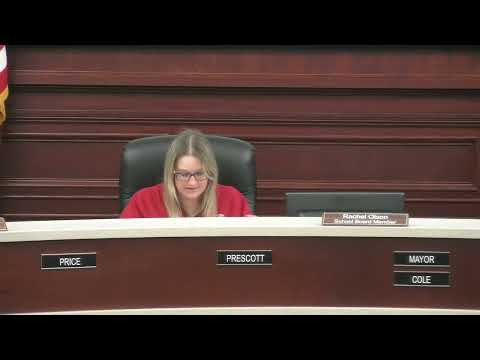
The Vermillion School District 13-1 Board of Education voted unanimously Jan. 13 to renew a five-year general fund opt-out of $880,000 per year, authorizing the county auditor to levy the excess if not referred by petition.
The Vermillion School District 13-1 Board of Education voted unanimously Tuesday to approve a five-year general-fund tax opt-out that would raise an excess levy of $880,000 per year, a measure board members said renews the district's current authorization.
The board’s business manager, Mr. Kosher, told members the district has had the same $880,000 opt-out for the previous five-year period and that the resolution before the board would “renew what is currently in place.” He said the district would publish the required notice of a property tax increase in the Plain Talk newspaper for two consecutive issues and that because this is a renewal, “there won't be any tax impact felt compared to the last 10 years.”
Board chair Rachel read the resolution aloud, including the notice language required for publication: “The governing board of the Vermilion District 13 Dash 3 do state that above said board is unable to operate under the tax limitation measure currently in state for the general fund. We therefore opt out of such tax limitations the amount of $880,000 starting with the calendar year 2025 payable taxes and the calendar year of 2026. This opt out will be in effect for 5 years, which will be through pack through taxes payable in the calendar year of 2,030.”
Kosher said the district expects to rely partly on an accumulated capital outlay balance—largely from prior ESSER reimbursements—if budget pressures arise during the five-year opt-out period. He noted districts across South Dakota use different approaches to manage budgets, including capital outlay flexibility, and that about half of the state's districts have an opt-out in place.
The board voted by roll call after a motion to approve (first by Mark; second by Carol). The roll call recorded five ayes and no nays; the motion carried.
Nut graf: The resolution renews an existing local tax authorization that the district says is necessary to avoid “substantial cuts to general operation.” The opt-out must be published as a notice of a property tax increase under state rules and can be referred to a public vote if a petition signed by at least 5% of registered voters in the district is filed within 20 days of first publication.
The board signed and filed the resolution and directed the required publication. Absent a successful petition referendum within the legal window, the county auditor is authorized to spread an excess levy to raise the stated amount for taxes payable during the opt-out period.