Get Full Government Meeting Transcripts, Videos, & Alerts Forever!
Get email alerts on the Public Safety topic
No spam. Unsubscribe anytime.
Council considers nuisance deer management ordinance as residents raise safety and process concerns
Summary
The council read an ordinance to create a nuisance deer management program and heard public concerns about bowhunting safety, homeowner permission, and use of city property for hunts; no adoption vote was taken on Jan. 7.
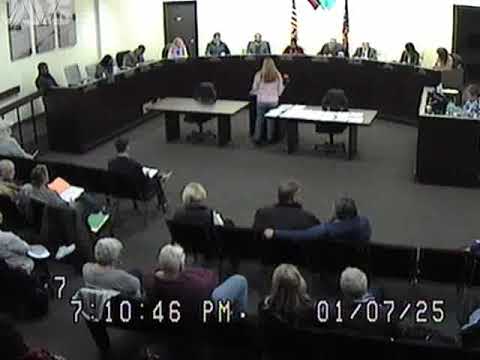
Whitehall City Council on Jan. 7 read, by title, an ordinance amending Chapter 505 to create a nuisance deer management program and heard several residents urge careful design and stronger safety provisions before any implementation.
The measure was read during the council meeting; council did not adopt the ordinance at that session. Residents used the public-comment periods to press the council for stricter controls, training requirements and limits on where hunts would occur.
Dwayne Stanek, who spoke during the first public comment period, warned about bowhunting risks if the program allowed hunting near homes. “When you hit a deer with bow, it typically does not drop on the spot. It will run,” Stanek said, noting a wounded animal could run into streets or yards where children play. He urged longer buffer distances and stricter oversight.
Tracy Michael, speaking during the second public comment period, said Whitehall could follow examples from neighboring jurisdictions. “When Gahanna did this, the Ohio Department of Natural Resources approved expert hunters … and they only hunted on city property,” Michael said, suggesting the city restrict hunts to public lands and use ODNR-approved hunters.
Council Member Elmore said the deer program was in its infancy and that she was talking with Worthington, which has a nuisance management program. “It was only in its infancy stage to get out there with citizens … to get input,” Elmore said, and invited residents to help form a committee to examine particulars.
No formal action was recorded on Jan. 7; the ordinance was read by title and remains pending further review. Residents asked the council to clarify whether homeowner permission would be required for hunts on private property, to specify training and safety standards for hunters, to set conservative buffer distances from houses and roads, and to consider limiting hunts to city-owned parkland.
What happens next: Council members signaled additional committee work and outreach to other cities with nuisance deer programs. The ordinance remains under further consideration; council directed staff and members to continue public engagement prior to final action.