Get Full Government Meeting Transcripts, Videos, & Alerts Forever!
Get email alerts on the Code Enforcement topic
No spam. Unsubscribe anytime.
Stonecrest code enforcement reports 945 cases in six months; council sends truck-parking text amendment back for rework
Summary
Director Butts reported 945 code-enforcement cases during his first six months, outlined enforcement limits and collaboration with DeKalb County police for towing; the council directed staff and planning to revise a truck-parking text amendment to clarify definitions and exceptions.
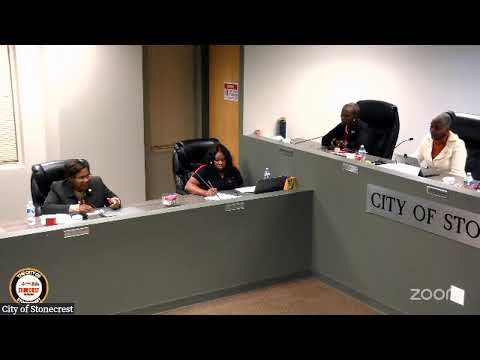
Director Butts told the City Council on Jan. 13 that code enforcement closed about 589 cases and had 356 open cases — a total of 945 cases — in his first six months on the job. Butts emphasized education and voluntary compliance as enforcement priorities and said officers now spend dedicated field time to increase visibility.
Butts described common violations under the International Property Maintenance Code including high grass and weeds, derelict vehicles and accumulation of trash on vacant property. He said code officers issue a notice of violation, allow a compliance date and then conduct reinspection; unresolved cases move to a citation and a municipal court hearing. Butts said the department is working with the city attorney to seek alternatives to the current end result — citation and fines — that staff say often do not produce long-term compliance.
Council members pressed operational questions about weekend coverage, vendor enforcement on private property, towing and interagency coordination. Butts said two officers are dedicated largely to business-license enforcement and that code enforcement relies on DeKalb County Police for incidents involving operable vehicles parked in the street or where towing is required. He said the code team is developing tools such as orange warning stickers to increase visibility and deter repeat behavior but cautioned staff not to mark vehicles that are operable and legally parked.
The council also discussed a recent text amendment intended to tighten restrictions on truck parking in residential areas. Councilmembers and staff said the draft ordinance currently mixes terms such as “business vehicle,” “commercial vehicle” and “commercial truck” and that those terms must be clarified and applied consistently. Planning and code enforcement staff reported several enforcement difficulties when a resident says a vehicle is “for recreational use” but neighbors view it as a large commercial truck.
Staff recommended clarifying whether the ordinance targets commercial trucks (heavy and medium tractor-trailers, flatbeds, delivery trucks and similar vehicles) rather than any vehicle used in a business. Multiple council members asked staff, planning and the city attorney to reconvene and return a revised text amendment that replaces inconsistent terms, tightens exceptions (for example, excluding nonresidential properties) and reconciles sections of the municipal code such as trailer-parking rules (6.1.15) and home-occupation allowances.
Council members asked that weekend enforcement schedules and weekend reports be shared with council and that officers provide a clearer case-status update when councilmembers pass constituent complaints to the department. Butts said he would provide the officers’ weekend schedule and recommended the council rely on both code enforcement and law enforcement for problems that cross codes and criminal statutes. The council asked staff to return with the truck-parking amendment after legal review and interdepartmental reconciliation.