Get Full Government Meeting Transcripts, Videos, & Alerts Forever!
Get email alerts on the Product Liability 93a Litigation topic
No spam. Unsubscribe anytime.
Appeals court reviews 93A and evidentiary rulings in LED lighting dispute
Summary
An appellate panel heard arguments in Wicked Light Supply Inc. v. Woodforest Lighting Inc. and MLS Company Limited over whether a trial judge properly found violations of G.L. c. 93A and admitted an investigative report into evidence.
An appellate panel heard oral argument in Wicked Light Supply Inc. v. Woodforest Lighting Inc. and MLS Company Limited, Docket No. 2024-0088, challenging a trial court's finding of a knowing and willful unfair or deceptive act under Massachusetts General Laws Chapter 93A and evidentiary rulings admitting a supplier report.
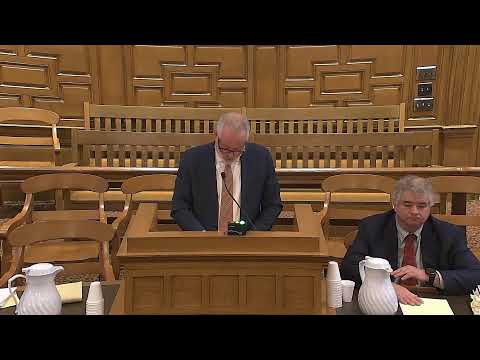
Appellants Woodforest Lighting and MLS, represented by Michael Fenzer, asked the court to reverse the 93A ruling and the related punitive damages and attorney-fee awards. Fenzer said the only documentary evidence suggesting product-wide defects was a March 2017 report (identified in the record as Exhibit 11) and that the record otherwise showed sporadic failures typical of LED fixtures. "The only evidence in the record of any putative cause of a lighting defect . . . was exhibit 11," Fenzer told the panel.
Why it matters: the appeal asks whether the trial judge correctly concluded the defendants knowingly sold defective lighting fixtures and acted unfairly or deceptively in attempting to remedy problems, a ruling that triggered enhanced damages under c. 93A.
Appellants' position. Fenzer acknowledged that some fixtures flickered or strobed but argued the evidence does not support a finding that Woodforest knew of a product defect when the fixtures were sold between December 2016 and December 2017. He emphasized that the report relied on by the trial judge post-dated many sales and that the trial record lacks authentication or testing showing manufacturers purposely mislabelled or repackaged fixtures.
Appellees' position. Douglas Hartman, representing Wicked Watts and Wicked Light Supply, argued the record supports the judge's findings. Hartman told the panel that customers experienced growing rates of fixture failures over time, replacement fixtures were incompatible with installed runs, and the defendants failed to deliver promised replacement product (a LeadVance option) or adequate corrective measures. Hartman said the pattern of communication and replacement attempts — and the ultimate failure to resolve the problem — supported the trial court's determination of unfair or deceptive conduct and the award of multiple damages and fees under c. 93A.
Evidentiary dispute. Counsel debated whether Exhibit 11 (an investigative report and related transmittal email, designated Exhibit 10) was admitted properly and, if so, for what limited purposes. Appellants argued the report was unauthenticated and that the jury may have weighed it beyond its limited admissible scope; appellees said the report was admissible for the limited purpose and other documentary email evidence corroborated the defendants' awareness of problems.
Damage and remedy issues. Appellants asked the court to reverse the trial court's c. 93A relief and multiple damages, arguing the supplier and distributor acted in good faith to satisfy warranty obligations and that any missteps were not unscrupulous or deceptive. Appellees countered that the pattern of replacements, admitted incompatibilities, and communications over an extended period justified the judge's findings of a knowing and willful violation.
Panel disposition. The panel heard argument from both sides and indicated no immediate ruling from the bench; the court will issue a written decision after reviewing the record and the parties' filings.