Get Full Government Meeting Transcripts, Videos, & Alerts Forever!
Get email alerts on the Premises Liability Vehicle Share topic
No spam. Unsubscribe anytime.
Appeals court hears argument to vacate judgment in Amherst Zipcar injury case
Summary
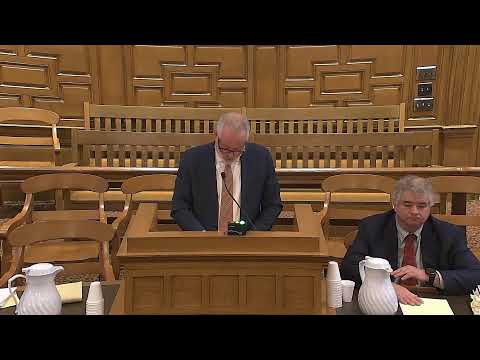
An appellate panel heard oral arguments in Elizabeth Werner v. 57 East Pleasant Street LLC and others over whether a trial court erred in dismissing negligence claims after a customer was struck crossing Triangle Street in Amherst while returning a rental car.
An appellate panel heard arguments in Elizabeth Werner v. 57 East Pleasant Street LLC et al., Docket No. 2024-0475, over whether the lower court correctly entered judgment for the defendants in a case stemming from a 2017 pedestrian collision on Triangle Street in Amherst, Massachusetts.
Counsel for the plaintiff told the court the judgment should be vacated because (1) the trial court misapplied the law identifying the duty owed, (2) the defendants assumed a duty when they provided substitute instructions for returning the vehicle, and (3) factual disputes about causation should have been decided by a jury. "This court should vacate the judgment for 3 reasons," said Counsel for Elizabeth Werner (unnamed in the transcript).
Why it matters: the case turns on the legal question of whether an off-street parking provider or a vehicle-share operator can be held responsible, as a matter of law, for directing customers into positions that create foreseeable risks on an adjacent public roadway. If the appeals court finds a duty existed or was assumed, the case could be sent back for a jury trial on negligence and causation.
Plaintiff argument. Counsel for the plaintiff described the October 21, 2017 incident as occurring during a crowded homecoming week and said the instruction system for returning the vehicle placed customers in foreseeable danger. Counsel referred the court to a photograph in the record appendix (RA 259) showing a vehicle extending over a white line into the lane of oncoming traffic, and argued that the substitute instructions — including leaving the vehicle in a threshold position or walking around the building to use a keypad — were unsafe and, in some respects, "illegal," creating a fact question for a jury.
Defense arguments. William Besh, counsel for Zipcar, urged the panel to ignore the entranceway photographs and contended the way customers access the garage is permitted and was approved when the building was constructed. Besh told the court that, for summary-judgment purposes, Zipcar accepted the plaintiff's characterization of what the customer did (parking across the street and walking back) and said the legal question is whether Zipcar owed a duty to prevent customers from crossing a public street. He argued the law generally does not impose liability on a business for hazards on a public roadway it does not control.
56 East Pleasant Street (the garage). David O'Connor, counsel for 56 East (the garage owner), emphasized the limited relationship between his client and Zipcar, saying the garage merely rented three spaces and provided garage door openers. O'Connor argued there was no evidence the premises were defective, no evidence the garage created the roadway risk, and no privity or ability to control Zipcar users.
Case law and disputed legal points. Counsel and the panel discussed multiple state precedents including Davis v. Westwood, Mullins v. Pine Manor, Dole v. Foster, and cases addressing assumption of duty principles. Plaintiff counsel relied on decisions holding that voluntarily assumed safety duties must be performed with due care; defense counsel relied on precedents holding businesses are not generally responsible for motorists on public streets the business does not control.
Panel disposition and next steps. After argument the panel indicated it would take time to review the legal issues and render a decision; a judge thanked counsel and said, "It's a tragic situation, of course, and we're sorry about that. But we'll look at the legal issues and render a decision." No ruling was announced from the bench at the conclusion of the session.
For context: the core factual claims presented on appeal are that the plaintiff was struck while attempting to return a rental vehicle and suffered catastrophic injuries; the parties dispute whether the defendants' instructions or the garage entrance design created a foreseeable risk that the defendants could be required to address as a legal duty. The court's decision will focus on whether the judge below correctly resolved the duty question on summary judgment or whether a jury must decide negligence and causation issues.