Get Full Government Meeting Transcripts, Videos, & Alerts Forever!
Get email alerts on the State Taxation topic
No spam. Unsubscribe anytime.
Appeals court weighs tax reach over sale of startup stock by nonresident founder
Summary
The court considered whether capital gain from sale of stock in AcadiaSoft by Craig Welch, who left Massachusetts before sale, is taxable to Massachusetts under the expanded definition of Massachusetts‑source income in G.L. c. 62, § 5(a) and related Department of Revenue regulation.
The Appeals Court heard argument in 2024P109, Craig H. Welch and another v. Commissioner of Revenue, over whether a nonresident’s gain on the sale of stock in a Massachusetts company is taxable in the Commonwealth. The central legal question is whether the gain was “effectively connected” with the taxpayer’s trade or business in Massachusetts or was compensatory in nature, bringing it within the statutory sourcing rule in G.L. c. 62, § 5(a).
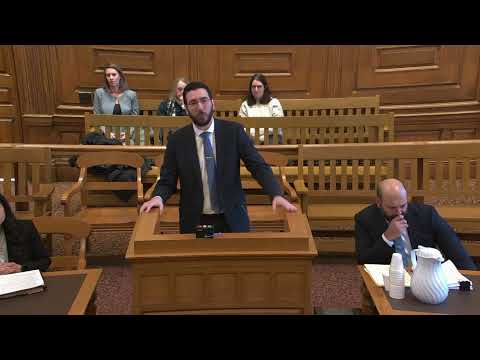
Counsel for the appellants, Michael Bowen, said Mr. Welch received the stock as part of forming AcadiaSoft in 2005 and later sold the shares as a nonresident in 2015. Bowen emphasized that the gain was reported as long‑term capital gain for federal purposes and argued that the commissioner’s regulation (830 CMR 62.5A(13)(c)(8)) generally treats such federally characterized capital gain from sale of C‑ or S‑corporation shares as non‑Massachusetts source income unless anti‑abuse or compensation grounds apply.
Celine Dela Foscott Condon, arguing for the Department of Revenue, said the statutory amendment that expanded Massachusetts‑source income to include “gain from the sale of a business or an interest in a business” and the accompanying regulation permit taxation where the gain is related to the taxpayer’s compensation or to income effectively connected to a trade or business conducted in Massachusetts. The department urged deference to the Appellate Tax Board’s factual findings that tied Welch’s long involvement in the company — including extensive management, personnel and financing work — to the realization of the capital gain.
Justices questioned whether the issue is principally factual (extent of Welch’s involvement) or legal (whether the statute and regulation impose taxation absent an anti‑abuse showing). Counsel debated the weight to be given to the federal characterization of gain as long‑term capital gain, the relevance of the 2005 stock grant timing, and whether subsequent agreements (for example, investor provisions tying stock to continued work) alter the tax treatment.
The court pressed on broader policy implications: counsel for the taxpayer warned that a broad reading could chill entrepreneurship and cross‑border investment, while the department said the statutory language and regulation were enacted to capture certain gains connected to Massachusetts business activities. The court reserved decision.
The appeal tests the intersection of state sourcing rules, administrative regulation, and how courts treat long‑term founders’ equity that appreciates because of the founder’s sustained work in‑state.