Get Full Government Meeting Transcripts, Videos, & Alerts Forever!
Get email alerts on the Property And Easements topic
No spam. Unsubscribe anytime.
Appeals court reviews arbitration award in Griffin–Mears easement dispute
Summary
The Appeals Court considered whether an arbitrator exceeded his authority and whether evident partiality required vacating an arbitration award resolving an easement dispute between Dana Griffin and Eric Mears.
The Massachusetts Appeals Court heard oral argument in 2024P96, Dana R. Griffin et al. v. Eric L. Mears, addressing whether a private arbitrator exceeded his authority and whether the arbitration award should be vacated for evident partiality. The dispute concerns the location, dimensions and uses of a recorded easement and an amendment of easement that the parties negotiated and recorded.
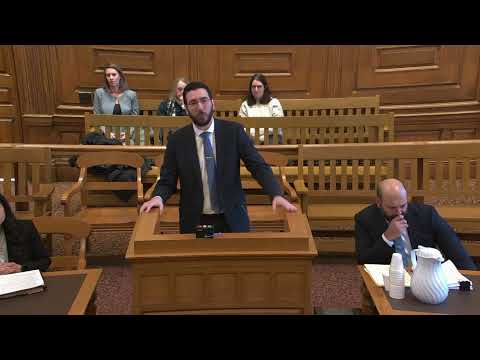
M. Erwin Walters, arguing for Eric Mears, asked the court to vacate the arbitral award on multiple grounds, contending the arbitrator improperly ignored the plain language of the amendment that allows Mears (owner of Lot B in the papers) certain uses “subject to the following” conditions and therefore conferred obligations not in the written settlement. Walters argued the arbitrator effectively rewrote the agreement, imposing an implied duty of unrestricted access and obligations to regrade or alter the physical easement area that the parties did not agree to.
Counsel for the Griffins, James Tacoulis, defended the award, saying the arbitrator resolved disputed factual questions about whether the easement, as surveyed and constructed, provided usable access and whether Mears’s parking and relocation of the entrance interfered with Griffin access. Tacoulis urged deference to the arbitrator’s factual findings and contended the reference to arbitration was proper because the settlement agreement expressly submitted disputes about the easement to arbitration.
Argument addressed several recurring themes: whether the amendment’s language was unambiguous and therefore susceptible to a plain‑meaning reading; whether the arbitrator improperly expanded the parties’ rights by relying on a covenant of good faith and fair dealing to require remedial work; and whether there was evidence of evident partiality or bias. Walters argued the arbitrator “ignored words” in the amendment and substituted his own access‑first interpretive lens; Tacoulis answered that the arbitrator’s interpretation fell within the scope of the agreed reference and that the arbitrator conducted a two‑day evidentiary hearing that included surveys, photographs and witness testimony.
The justices questioned counsel about the scope of review under G. L. c. 251, § 12 (statutory vacatur standards), addressing issues of arbitrability, whether the arbitrator exceeded the four corners of the contract, and how to apply the limited judicial review standard where an arbitrator’s findings rest on factual determinations. The court did not announce a decision at argument.
The arbitration award ordered remedial steps to restore access in part and found violations including overnight parking and interference with access; the appellants argue those remedies and findings exceed what a recorded amendment and settlement permit. The appeals court will determine whether the award must be confirmed or vacated.