Get Full Government Meeting Transcripts, Videos, & Alerts Forever!
Get email alerts on the Land Development Code topic
No spam. Unsubscribe anytime.
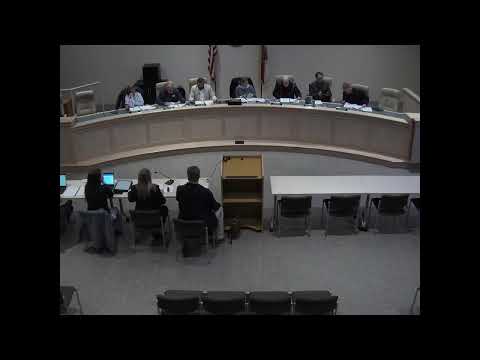
Jacksonville Beach staff review near-complete land development code rewrite at workshop
Summary
Jacksonville Beach planning staff and consultants presented a near-final rewrite of the city’s Land Development Code at a workshop, laying out changes to definitions, zoning districts, parking rules, short‑term vacation rental registration and enforcement, and other standards.
Jacksonville Beach planning staff and consultants presented a near-final rewrite of the city’s Land Development Code (LDC) at a workshop, laying out changes to definitions, zoning districts, parking rules, short-term vacation rental registration and enforcement, and other technical standards.
At the workshop, Kimberly Horn, staff presenter, told planning commission members the update is essentially a full replacement: “Every section of this LDC has been touched in 1 way or another,” Horn said, calling the document “almost a rewrite” and noting a new, expanded definition section and an updated zoning map.
The rewrite, which staff described as the product of multiple workshops dating back to 2022, to bring the code into alignment with state law and the Florida Building Code, focuses on several substantive areas. Staff emphasized process and clarity changes (public notice tables on page 74 of the draft), land-use definitions, conditional-use criteria, dimensional standards for existing single‑family lots, and new administrative enforcement tools.
Why it matters: the LDC governs what property owners and developers may build and how. Staff framed the changes as implementing the comprehensive plan and the council’s strategic priorities (including preserving single‑family neighborhood character) while updating the city’s 316‑page code to modern standards.
Major changes described
- Definitions and organization: Horn said the project reorganized the code and created a large new definition section early in the document so users can look up terms. Staff also corrected statutory and internal references.
- Conditional uses and variances: Staff added clearer standards and base conditions for common conditional uses and moved supplemental conditions into the conditional‑use section. Christian (staff member) said the variance criteria were rewritten to stop producing contradictory answers and to reduce confusion for applicants (variance page referenced at page 89 in staff materials).
- Accessory dwelling units (ADUs) and single‑family protections: The draft adds ADU criteria and tighter parent‑lot requirements so ADUs preserve single‑family character; staff said they added protections for existing standalone single‑family homes so owners can make modest renovations without lengthy procedures.
- Townhomes and attached products: The code limits townhome rows to four units, widens lots and setbacks so two‑car driveways are feasible, and introduces required offsets for runs of three or more units to avoid long monotonous facades; staff said this aligns zoning with the Florida Building Code and local design concerns.
- Lot sizes, setbacks, and lot coverage: Staff said many minimum lot sizes were reduced to match the city’s prevalent lot sizes so fewer lots are nonconforming and require variances. The draft establishes a 35% lot‑coverage cap for primary structures with an additional 15% allowance for other impervious surfaces, according to staff discussion.
- Parking and multimodal incentives: The draft replaces older parking formulas with a new parking table (page 155) based on industry standards and local context. Staff described a downtown incentive zone where most properties would not be required to provide on‑site parking (exceptions: hotels and residential uses), parking reduction options (bike racks, golf‑cart spaces, compact spaces, etc.), and a clarified payment‑in‑lieu calculation tied to the construction cost of a comparable parking structure rather than land valuations (staff cited pages 160–162 for reductions and payment calculations).
- Short‑term vacation rentals (STVRs) and enforcement: The draft extends registration requirements citywide (to include multifamily and condo units previously exempt), lowers maximum occupancy from 16 to 12 in some provisions, requires a responsible‑party contact and affidavit compliance, and adds enforcement tools including administrative citations in tiers and magistrate fines. Heather (staff member) summarized the approach: requiring registration will allow fire‑marshal safety inspections and give staff a contact for complaints. Staff noted Florida statutes limit municipal authority and that state preemption constrains what the city can and cannot do with STVRs.
- Signs, outdoor displays and landscaping: Staff added limited allowances for apron/A‑frame signs in commercial zones, permitted small outdoor retail displays during business hours (plants, outdoor furniture, bicycles were noted), and tightened sunset provisions for nonconforming pole signs. The draft also expands landscape standards with a table of salt‑tolerant and native species (pages 200 and 204 were cited).
Process, next steps and limitations
Staff said the draft will go to the planning commission for a formal recommendation and then to city council for adoption. Workshop presenters reminded commissioners the document is a replacement, not a redline edit, and encouraged members to meet staff individually in the two weeks before the planning commission hearing; the presenters said the hearing is scheduled for the 27th (location change to South Beach Park room due to AV upgrades).
Several commissioners raised procedural questions and policy concerns. A member identified as “Member Marty” asked whether minimum bedroom and dwelling‑size definitions could limit tiny homes and other affordability strategies; staff replied they lowered minimums across residential districts but remain constrained by the Florida Building Code for certain measures. Commissioners also questioned the payment‑in‑lieu methodology and how the annual base number will be established; staff said the city will adopt a single annual base figure tied to construction costs and update it annually, rather than the prior block‑by‑block land‑value method.
On enforcement and STVRs, staff cautioned that capacity for active enforcement is limited: registering properties is intended as an initial compliance and safety step, not an immediate crackdown. Staff said citations and fines would be phased in with education, and that large‑scale enforcement would require more staffing.
Direct quotes from meeting participants are limited to the listed speakers above; staff said the rewrite is “almost a rewrite” and that “every section of this LDC has been touched in 1 way or another,” and noted the goal of providing “a bigger toolbox” for developers, homeowners and businesses.
Ending
Staff urged commissioners to review the materials in the packet (tables and summaries called out during the workshop) and to meet with staff ahead of the planning commission hearing. No formal votes or ordinance adoptions occurred at the workshop; staff presented the draft, answered questions, and sought commissioner feedback ahead of the formal public hearings.