Get Full Government Meeting Transcripts, Videos, & Alerts Forever!
Get email alerts on the State Legislation topic
No spam. Unsubscribe anytime.
Merrimack state representatives preview bills on therapeutic cannabis, lakes and climate
Summary
State representatives from Merrimack summarized a range of bills they plan to sponsor or support, including changes to therapeutic cannabis rules, a Baboosic Lake village-district proposal, a cyanobacteria mitigation license plate, an ALS registry proposal and measures on energy codes and PFAS products.
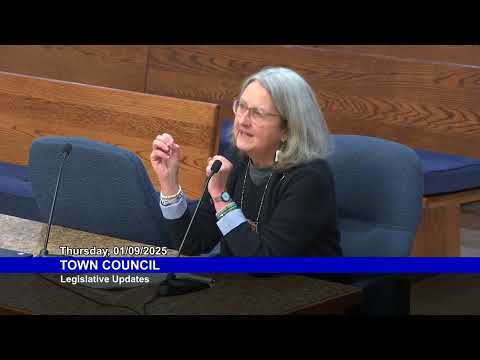
State Representatives from Merrimack used the town council meeting on Jan. 9 to summarize legislation they expect to file this session, outlining bills on therapeutic cannabis, long-COVID accommodations, energy and environmental protections.
Representative Wendy Thomas, who said she will prime-sponsor multiple therapeutic-cannabis bills, described proposals to allow adult therapeutic centers (ATCs) to buy third‑party hemp-derived cannabidiol (CBD), to permit limited home cultivation for qualifying therapeutic cannabis patients and to allow ATCs to operate as for‑profit entities if they choose. Thomas said allowing ATCs to buy hemp CBD could “lower the cost for the patients” and help patients in areas with limited transportation or availability of specific strains.
Representative Rosemarie Rung described five bills she has formally filed. Her proposals include creating a conservation license plate to fund cyanobacteria mitigation through the New Hampshire Department of Environmental Services (DES), criminalizing the intentional dumping of yard debris into state-regulated waterways under the Shoreline Protection Act, and raising administrative fines for shoreline violations (she noted current maximums were set in 1991). Rung also outlined a bill to require DES or other state agencies to count ALS diagnoses in a registry and another to enable formation of village districts whose voters could approve local measures to protect surface water — she cited Baboosic Lake as an example of a lake with cross‑town management challenges that a village district could address.
A separate state representative summarized additional bills and priority topics without being named in the transcript; those items included proposals on extended statute-of-limitations for PFAS-related civil actions, a request that the state contribute 7.5% toward the state retirement system to reduce local tax pressure, and bills on solid-waste reduction and sound barriers along the turnpike.
Several speakers stressed that some proposals are technical or intended to expand administrative options rather than impose mandates: Rung said the proposed change allowing ATCs to operate for profit would be optional, not required; Thomas said the home‑grow proposal (for therapeutic patients only) includes security and visibility safeguards.
Representatives also described process details: several items are still in the LSR (legislative service request) stage and have not yet received bill numbers; Rung said she will circulate hyperlinks when numbers are assigned. Representatives asked the council to share bill numbers or background with legislators on request, particularly for energy-code and carbon‑pricing proposals that could affect eligibility for federal funds.
Why it matters: The bills described would affect residents’ access to therapeutic cannabis, local control of water resources, and the state’s approach to environmental and public‑health issues. Several proposals — the cyanobacteria license plate, Shoreline Protection Act amendments, and a village‑district option — are explicitly framed as tools to help towns address lake pollution and harmful algal blooms.
The representatives asked that town leaders and residents follow the progress of those bills and provide testimony or letters of support where appropriate.
Next steps cited by the speakers included filing of bill text (LSRs moving to bill numbers), referral to committee, and opportunities for public testimony at the State House.