Get Full Government Meeting Transcripts, Videos, & Alerts Forever!
Get email alerts on the Civil Commitment topic
No spam. Unsubscribe anytime.
Appeals Court Reviews Civil-Commitment Ruling, Debates Jurisdictional and Imminency Standards
Summary
The Appeals Court heard argument on Jan. 13 in Worcester Recovery Center & Hospital v. CS about whether the hospital proved the statutory elements for civil commitment under Chapter 123, including imminency of harm, least‑restrictive alternative, and whether a prior commitment requirement is jurisdictional.
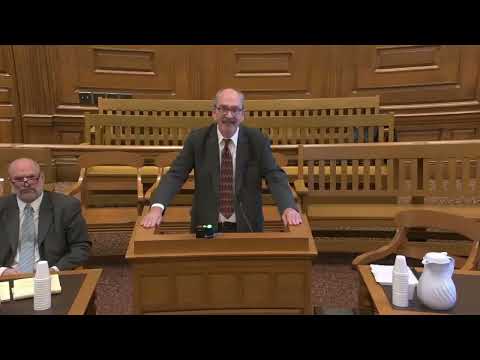
An Appeals Court panel of Judge John Englander, Judge Hodges and Judge Smith heard oral argument on Jan. 13 in Worcester Recovery Center & Hospital v. CS over whether the hospital proved the elements required for involuntary civil commitment under chapter 123 and whether the lower courts applied the correct standards.
Appellant counsel Eric Beal argued first that the petition and record did not satisfy what he described as a jurisdictional element derived by analogy to the Bornwood line of cases; Beal urged the panel that the hospital had not established the prerequisite showing (in his view) for the court to exercise authority. He also pressed a sufficiency-of-evidence challenge on imminency and on the availability of less‑restrictive alternatives, noting that family testimony about past weight loss and shelter history was remote in time and that there was no contemporaneous medical evidence showing current malnourishment.
Beal described the statutory standard and burden on the petitioner, saying the hospital must show a “very substantial risk of imminent physical harm” and argued that several asserted risks presented at trial were not, by themselves, cognizable harms under chapter 123. He also faulted the record for lacking documentary proof of the hospital’s statutorily required quarterly review of less‑restrictive alternatives and urged that attorney questioning and exhibits did not support commitment beyond a reasonable doubt.
For the Worcester Recovery Center and Hospital, Assistant Attorney General Konstantin Tretyakov said the appellate division’s analysis was correct and that the record, viewed in the light most favorable to the department, supported commitment. Tretyakov pointed to testimony from the treating psychiatrist and from the patient’s sister documenting severe, persistent schizophrenia, delusional beliefs (including testimony that the patient believed she had an apartment when she had been homeless), prior emergency-room treatment with signs the hospital characterized as malnutrition, and the psychiatrist’s opinion that a shelter placement or family placement was not available or viable for the respondent.
The court pressed both sides on several legal questions: whether the Bornwood decision (and related appellate-division authority) transformed a prior-commitment allegation into an element of subject-matter jurisdiction; which standard of procedural sufficiency the court should apply on review (defense urged application of Latimore/“view the evidence in the light most favorable” analogies; appellee urged deference to findings and that the same beyond‑a‑reasonable‑doubt standard supports affirmance); and what documentary evidence is required to prove that less‑restrictive alternatives were considered and found unavailable.
Argument also addressed process issues: the parties agreed the habeas/petition process and timing differ if a petition follows a prior commitment (14‑day scheduling) versus an initial commitment (5‑day schedule), and the department noted the hearing in this matter was held within 14 days and that the record contains testimony and documents showing the respondent was being treated as a subsequent commitment. Both sides acknowledged there was no written trial-court Rule 52-style narrative of findings, which counsel said complicates appellate review.
The panel heard argument and did not issue a decision from the bench. Counsel referenced multiple authorities and the appellate record on standards of proof, imminency and least‑restrictive alternatives; the court will issue a written opinion after reviewing the record and briefs.