Get Full Government Meeting Transcripts, Videos, & Alerts Forever!
Get email alerts on the Civil Contempt topic
No spam. Unsubscribe anytime.
Appeals Court Hears Contempt Appeal Over Excavation Spoils Pile
Summary
An Appeals Court panel heard argument on Jan. 13 over whether a mound of excavated earth on an adjoining parcel violated a 2006 Supreme Judicial Court injunction and whether attorney fees awarded for civil contempt should stand.
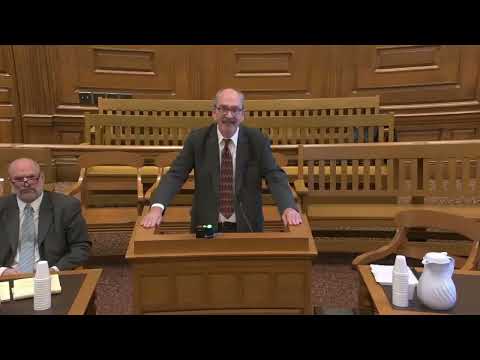
An Appeals Court panel consisting of Judge John Englander, Judge Hodges and Judge Smith heard oral argument on Jan. 13 in Radigan v. Weil over whether a mound of excavated earth near the Edgewater House Trust property violated a permanent injunction and supported an award of attorney's fees.
The case centers on a 2006 Supreme Judicial Court decision that modified an earlier injunction and included language barring “unattended any objects more than 6 feet in height within 40 feet of the plaintiff's boundary line.” Appellant counsel Sander Ricklein argued that the injunction’s opening clause — that the defendant is “permanently enjoined from unreasonably interfering with the use and enjoyment of the plaintiff’s property” — controls, and that the mound at issue was not shown to have produced an unreasonable interference.
Ricklein told the panel that his client, Evan Weil, “didn't place it there” and that the pile was the “spoils from excavating the foundation,” created by the buyer, Brian Melanson. He argued the pile was temporary, ambiguous under the injunction’s wording and that Weil lacked the requisite willful intent for civil contempt. Ricklein also said removal occurred before the first appearance in Newburyport and urged that any fee award be limited to the period during which the pile actually existed.
Counsel for the appellees, Kevin Gainey, said the trial court findings established that Weil “knew that the mound had been created and placed on the boundary line” and allowed it to remain for three months and then for more than six weeks after plaintiffs demanded removal. Gainey urged the panel that intent is not required and that the trial court properly found clear disobedience of an unequivocal command. He pointed to the permit for excavation being issued in Weil’s name and to the SJC’s list of prohibited items as background for the injunction.
The judges questioned both sides about preservation of the arguments below, the standard of review for factual findings (clear error for findings of fact), and the legal standard for civil contempt, including whether the trial judge made findings or reached a legal conclusion. The panel noted the SJC’s 2006 opinion and earlier trial record were part of the appellate record and repeatedly asked how the injunction’s broad opening clause should be reconciled with the later, illustrative sentence listing specific prohibited items.
Both sides addressed attorney's fees. Ricklein said that, if there was no contempt, “there should be no award of attorney's fees,” and if fees were awarded they should be limited to the time the offending pile was present. Gainey urged that fees for the appeal were warranted under the appellate rule cited in the brief if the court finds the appeal frivolous or in bad faith.
The panel took no immediate disposition from the bench at the close of argument. The parties had already noted that the property has since been sold and that the contempt matter concerned past conduct and the appropriate relief and fees.