Get Full Government Meeting Transcripts, Videos, & Alerts Forever!
Get email alerts on the Civil Litigation Jury Instructions topic
No spam. Unsubscribe anytime.
Appeals court revisits jury 'impact' instruction and whether COVID delays alter prejudgment interest
Summary
In McDonough v. Paudell the panel examined whether a trial judge’s supplemental jury instruction that used the word “impact” could have led jurors to conflate lesser effects with but‑for causation. The court also heard competing arguments about whether pandemic-related delays justify tolling statutory prejudgment interest.
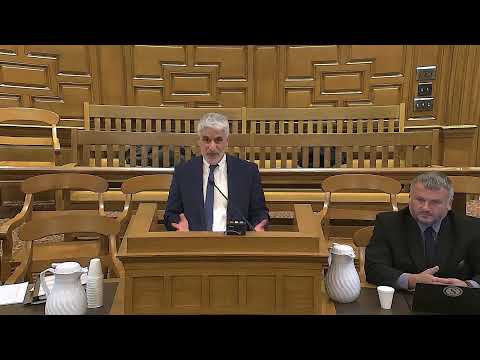
The Appeals Court heard argument in a medical-negligence appeal in which the plaintiff challenged a trial court’s response to a jury question about causation (the jury asked whether negligence merely need have an “impact” on a harm) and separately asked the court to revisit a trial-court decision about whether prejudgment interest should have been tolled or reduced because of COVID-related delays.
Plaintiff counsel acknowledged he did not formally object to the specific ‘‘impact’’ language during the charge conference but argued the jury later posed a clear question, signaling confusion and that the judge’s reinstruction did not answer the jury’s concern about whether a slight effect suffices for causation. Defense counsel relied on Leupold v. Hanlon (SJC precedent) and subsequent Appeals Court guidance to argue the trial judge’s instruction—read as a whole—was legally correct and, in any event, the issue was waived by defense counsel’s conduct at trial.
The panel also questioned both sides closely about the long trial scheduling history: an initial trial date was set in 2019, and continuances and rescheduling pushed the matter into 2021 and later. Defense counsel argued the record contains no express order tolling prejudgment interest for COVID and that the SJC has treated prejudgment interest as mandatory; plaintiff counsel urged a fairness analysis or at minimum a partial toll for the period when civil juries were unavailable.
The court heard additional, case-specific arguments about informed-consent doctrine, expert-disclosure and whether cross‑examination opened lines of testimony; it took the case under submission.
Why it matters: The decision will clarify how trial courts should respond when jurors ask whether mere “impact” suffices for causation and whether the pandemic creates an equitable basis to alter statutory prejudgment interest in civil cases.