Get Full Government Meeting Transcripts, Videos, & Alerts Forever!
Get email alerts on the Community Services topic
No spam. Unsubscribe anytime.
Public comments highlight domestic violence services, LGBTQ+ concerns, immigrant support, mental health and climate at DeKalb council meeting
Summary
Speakers during the Jan. 13 public comment period urged stronger collaboration between law enforcement, schools and local nonprofits on domestic violence response; raised worries about threats to LGBTQ+ rights; urged continued support for immigrants; asked for more accessible mental‑health services; and called for climate action.
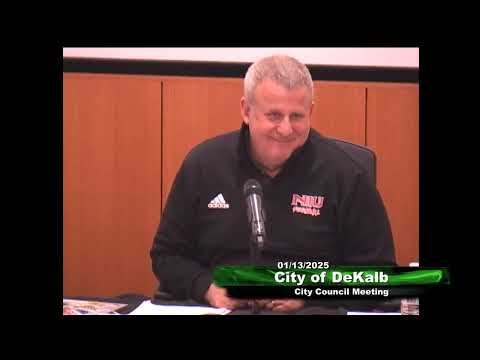
During the Jan. 13 public comment period, multiple residents and nonprofit representatives urged the DeKalb City Council to support services for vulnerable residents and to keep public safety, equity and climate resilience on the city’s agenda.
Safe Passage and domestic‑violence response: Beth Gagnon, prevention, education and communications manager at Safe Passage, reminded the council that domestic violence services are available year round and asked the city to partner more closely with Safe Passage. Gagnon urged local law enforcement to implement a lethality‑assessment protocol so survivors can be connected immediately to services and called for DeKalb High School to partner with Safe Passage on student education about dating violence and safe technology use. She also asked city officials and the public to avoid describing the organization as “the women’s shelter,” saying Safe Passage serves all survivors regardless of gender.
LGBTQ+ concerns and community safety: Frankie DiTaccio, a resident and queer‑rights advocate, urged the council to prepare for potential policy changes at the state and federal level and to protect vulnerable residents. DiTaccio cited national statistics on anti‑LGBTQ legislation and violence, and asked local leaders to stay informed and supportive; he praised past city support for DeKalb Pride and urged continued local leadership.
Immigrant support and community welcome: Angelica Mendoza described her volunteer work with immigrant‑rights organizations and reminded the council that DeKalb adopted a welcoming proclamation in 2018. She urged the city to continue partnerships that support undocumented residents, including community organizations that provide aid and integration services.
Mental health and youth services: Dylan Cathro, a youth therapist with Northwestern Medicine, described disparities in mental‑health diagnosis and access for children of different races and urged the council to help improve outreach and information about available services, including connections to the DeKalb mental health board.
Food security and school‑based support: Denise Salihullu, director of Barb Food Mart, urged the council to prepare for potential federal funding cuts that could increase hunger and food insecurity. She said that even with national anti‑poverty gains in recent years, “more than two‑thirds of students in our communities are still considered low income,” and asked the city to be ready to support families and partners that serve students.
Climate and local adaptation: Kendra Holton, co‑founder of Decarbon DeKalb, urged the council to continue implementing climate‑action measures (she cited the city’s 2024 climate resolution) and voiced concern about federal nominees who deny climate science. She said a rapid transition to renewables would yield health and economic benefits for the city.
Cross‑cutting themes and civic context: Multiple speakers emphasized solidarity among marginalized groups and urged the council to pursue inclusive, safety‑focused programs such as outreach, additional winter events to build connections, self‑defense offerings and improved coordination between schools, police and service providers. Safe Passage announced a public rally scheduled for Saturday, Jan. 18, 9 a.m.–11 a.m. at the DeKalb County courthouse.
Ending: Council members thanked public commenters and noted staff resources and community partners that can assist; no formal council action was taken on these public comments at the meeting, though several comments invited staff follow‑up or referrals to city boards and agencies.