Get Full Government Meeting Transcripts, Videos, & Alerts Forever!
Get email alerts on the Administration Consolidation Plan topic
No spam. Unsubscribe anytime.
District outlines consolidation plan that would close five schools, projects roughly $7 million in savings
Summary
Superintendent Luke Minor and district staff presented a draft consolidation plan at a Jan. 13 work session that would close five elementary schools, estimate about $7 million in initial savings (approximately $4.8 million annual perpetual savings) and model transportation, staffing and repurposing implications for affected communities.
Fairbanks — At a Jan. 13 work session following an hour of public testimony, the Fairbanks North Star Borough School District administration presented details of a draft consolidation plan that recommends closing five elementary schools and estimates roughly $7 million in initial savings and about $4.8 million in ongoing annual savings.
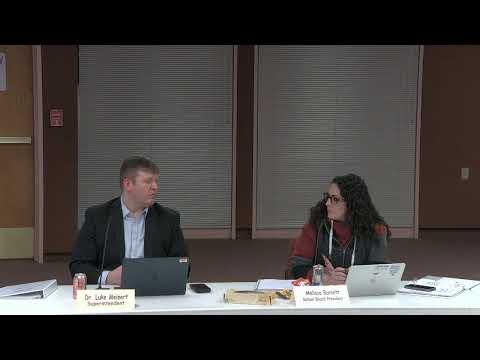
Superintendent Dr. Luke Minor told the board that the recommendations were produced using a community‑created framework and that the district will release a proposed budget on Feb. 17; administrators said the board must forward a recommended budget to the borough by April 1. "Once the board makes a decision, the school district is required to offer school district facilities to charter schools, and they have the right of first refusal. That's required by the state," Minor said during the presentation.
Administration outlined the financial mechanics and operational impacts. Staff said state foundation funding uses a multi‑year hold‑harmless process when a school is removed from the formula: in the first two years the district retains 100% of the lost revenue, then the allocation steps down (year three ~33% decline, year four ~66.6%, year five a full revenue loss). The district estimated the consolidation of the five recommended schools would yield about $7,000,000 initially and approximately $4,800,000 in perpetual annual savings once hold‑harmless reductions phase in.
Charter leasing and facilities: the administration reported roughly $1.5 million in annual charter lease payments to private landlords across district charter schools; Effie Cochran’s arrangement was listed at about $257,000 a year and that number includes utilities. The administration said returning buildings to the borough is an option, but warned that returning many buildings at once would impose burdens on borough budgets and that vacating the district administration center (ADC) would not save money because much district infrastructure and staffing would still be required. Andy DeGraw, chief operating officer, said moving servers and office infrastructure could cost in the neighborhood of $1 million in up‑front expenses.
Repurposing recommendations: the administration proposed repurposing Midnight Sun Elementary in North Pole for programs such as the Star of the North housing program and a BEST satellite and potentially some special education services. Administration estimated the annual maintenance and custodial cost for a repurposed building at roughly $235,000 and said retrofit costs vary by plan.
Transportation and redistricting: staff presented maps and modeling showing how students from affected schools would be redistricted to neighboring schools, and provided route modeling for ride times and distance. Overall, the district currently runs about 60 regular runs and projected the recommended plan would reduce required runs by two. Transportation director(s) described variable effects by community: for example, 2 Rivers’ maximum route time is modeled to fall from 51 to 43 minutes while average student ride time for 2 Rivers would rise by about three minutes; Hunter students redirected to Denali were modeled to experience up to a roughly 20‑minute increase in average ride time for some neighborhoods; Salcha students routed to Anderson Crawford would travel about 19.5 miles and an average student ride time increase of about 20 minutes in the model. The administration emphasized differences between route time (bus route length) and student ride time (time on board for each student).
Classrooms and class sizes: Assistant Superintendent Kate LaPlante said the district has unused classroom capacity at many buildings and that consolidations need not automatically increase class sizes, because classroom vacancies can be used to house educators who follow students to receiving schools. LaPlante told the board the district uses a pupil‑to‑teacher ratio (PTR) target of 25 students per elementary instructional teacher and that the proposed consolidations aim to stabilize or potentially lower PTR, though final PTR will depend on the board's budget decisions.
Staff impacts and timeline: administration reported roughly 158 staff currently assigned at the five recommended schools would be affected by location or position changes; estimated position reductions are about half that number with the remainder being staff who would likely transfer to receiving schools. Administration said it is negotiating with unions on transition processes, has agreed to retirement‑deadline extensions with FEA and announced an ESSA agreement reached the same day. Administration proposed a rough timeline in which closures would take effect July 1, 2025 if the board approves the plan; returning unused buildings to the borough could be staged in subsequent fiscal years if no repurposing is agreed.
Why it matters: the district presented consolidation as a tool to right‑size facilities amid a long-term enrollment decline — peak enrollment around 2009–2010 was about 14,500 students, the district said, and current enrollment is about 11,800 — while attempting to direct scarce dollars to classrooms and student services. Administrators warned board members that the district still faces a substantial budget shortfall and would need additional cuts after closures to balance the budget.
Next steps: administration will present student‑level impacts, special education and program details at the next work session (Jan. 27). The district will publish its proposed budget on Feb. 17; members of the public and board members requested updated slides and data be posted to board docs and the district said it would do so.
Ending: The presentation left several variables unresolved (exact retrofitting costs, final redistricting boundaries and ride times subject to change); the board will deliberate further in subsequent meetings and ultimately decide whether to adopt the recommended consolidations.