Get Full Government Meeting Transcripts, Videos, & Alerts Forever!
Get email alerts on the Municipal Finance And Infrastructure topic
No spam. Unsubscribe anytime.
Wasilla council trims FY26 goals, delays comprehensive user‑fee review pending ERP; keeps utility‑rate and water/sewer planning
Summary
At a Committee of the Whole, Wasilla City Council revised FY26 goal language after staff said a citywide, comprehensive user‑fee and cost‑recovery analysis is not feasible until the new Tyler ERP is implemented. The council kept a review of utility rates and moved to prioritize water/sewer master planning and targeted infrastructure work.
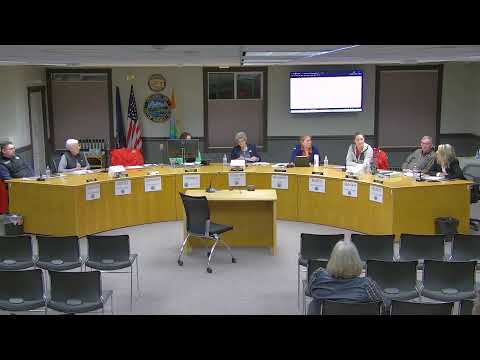
The Wasilla City Council met in committee of the whole and revised several proposed FY26 goals on financing and infrastructure, removing a citywide “comprehensive” user‑fee analysis for the coming year while keeping work on utility rate structure and sewer/water planning.
Council members and staff spent the session clarifying what the city can accomplish in FY26 and what must wait until staff finish a planned enterprise resource planning (ERP) rollout. Finance Director Cassie Olin told the council the department inherited a project begun under a prior director but that “there are hundreds of user fees” scattered through city code and that the workload, plus the Tyler ERP implementation, means a full, cost‑of‑service analysis across all departments is unlikely in the coming year.
“The workload of that is a tremendous lift for the finance department,” Finance Director Cassie Olin said, adding the new ERP will make many of the required financial reports and breakouts easier to produce.
Council members amended goal language to make the effort more incremental: instead of a single comprehensive review of current fees, the council agreed to gather all user fees into one document for future analysis and to require cost/user‑fee analysis for proposed projects that come before the council. Council member Crafton proposed deleting the word “comprehensive” and focusing on analyses for proposed projects; several council members supported either removing or rewording the original item so it would be achievable in FY26.
Council discussion also addressed related fiscal items that remain priorities. Staff described ongoing work with a consultant, WaterWorth (referred to in the meeting), to review utility rate structures and testing to ensure water and sewer user fees support capital and maintenance needs. Eric (staff member) described the sewer fund as “struggling” relative to the water fund and said rate and linear‑foot assessment fees used when developers connect to mains are outdated and need review.
On the city’s ability to produce a full fee analysis, Olin said: “With the current upcoming workload … I would say it would be a couple years before we can actually get to something of this nature.” Council members responded by making a staging plan: collect and publish all city fees in a single spreadsheet this year, then use the ERP data and the drafted spreadsheets as the foundation for a later comprehensive cost‑recovery analysis.
The council also discussed infrastructure goals tied to the water and sewer system. Members debated sequencing for an updated sewer/water master plan and near‑term capacity work. Some council members pushed to make the master plan the formal first step, while staff stressed the city must continue limited, targeted projects so pending development is not delayed. Eric (staff member) said mapping, system quantification and short‑term planning work are under way and that the master plan will build on those efforts.
Other actions and initiatives the council left in or refined for FY26 included continuing work to expand commercial opportunities at Wasilla Municipal Airport, continuing the multi‑year local roads paving program (with discussion about removing fixed dollar amounts from the goals and leaving spending targets to the budget process), and re‑evaluating the train depot/intermodal plan rather than committing to specific operations such as a city‑run trolley. Council members agreed to reframe the depot item as “reevaluate the plan to develop the intermodal facility” and to remove the trolley language, noting private operators or partners would likely lead any shuttle/trolley service.
Administratively, the council entered Committee of the Whole by motion (moved by Council member Graham; seconded by Council member Crafton) and later exited committee (moved by Council member Caudill; seconded by Council member Rubio); both motions passed with no objection. During the committee discussion the council reached informal consensus to remove the prior goal language that called for a comprehensive user‑fee analysis in the coming year and replace it with the staged approach described above.
Why this matters: the reworded goals change the timetable and scope for when residents and businesses might see comprehensive fee changes or new cost‑recovery measures tied to city services. Staff told the council that the Tyler ERP rollout is central to being able to run the analyses in a timely, auditable way; until that system is implemented, the finance office recommends incremental steps.