Get Full Government Meeting Transcripts, Videos, & Alerts Forever!
Get email alerts on the Parks Recreation topic
No spam. Unsubscribe anytime.
Consultants pitch 12‑field vision for new youth sports complex; study phase will test feasibility and funding
Summary
Consultants led by James Hazard presented conceptual plans and a work plan for a proposed youth sports complex on about 70 acres and said the next step is a feasibility and programming study, not construction.
Consultants seeking to lead a planned youth sports complex told the Mayor and Board Commissioners at a study session that a phased feasibility and master‑planning study will determine whether the city should pursue a multi‑field, tournament‑grade venue and how to fund and operate it.
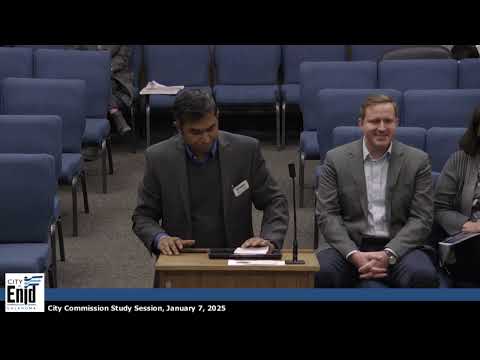
The presentation was delivered by a multi‑firm team led by James Hazard, who identified himself as the project manager and planning/landscape lead for the consultant team, with Sally Horsey (landscape and planning director), Chris Burdick of EnviroTech, Chris Teehee of TAP Architecture and JD Wood of Sports Facilities Company participating. Hazard told the commission the city issued a request for qualifications and received 14 responses; a selection committee narrowed that list and invited two firms to present. The current proposal covers the study and preliminary design phase only, not full construction.
Why it matters: Commissioners said the project—envisioned as a regional tournament venue that could generate tourism dollars and increased local programming—could relieve pressure on existing facilities and boost local economic activity. The consultant team said the preliminary study will address feasibility, programming, initial concepts, cost estimates and public engagement.
What presenters proposed: The team described a flexible master plan for roughly 70 acres west of the existing soccer complex. Core elements discussed included up to 10–12 fields in initial concepts, with two “premier” fields designed for championship play and options for artificial turf on selected fields to increase usage and limit weather cancellations. The consultants recommended a combined maintenance facility for efficiency, additional parking nodes (an early pass added about 300 spaces to the existing roughly 2,250 on site), and a loop road to manage ingress/egress and support future commercial development near South Garland.
James Hazard said the consultant approach centers on listening to stakeholders, producing multiple concept options, cost estimating at milestones and providing a phased plan that could meet the city’s stated goal of a first pitch within three years. “We need to know what the community expects, what the community wants,” Hazard said. He added the team would provide funding options and contingency planning if bids come in high.
Operations and revenue: JD Wood of Sports Facilities Company outlined the firm’s approach to programming and operations, saying the company supports strategic planning, market research and event operations. Wood cited examples where multi‑field complexes generated tourism dollars; for one large Florida complex he referenced, he said tournaments produced substantial local economic impact. The team said turf fields and flexible field design can increase bookable hours and tournament capacity, and that modern amenities (app‑based ordering, rentable cabana spaces, food trucks, shade structures) can boost revenue and guest experience.
Commissioner questions and staff clarifications: Commissioners asked whether synthetic turf would be reserved for championship fields; Hazard said that was a balanced first pass but that the study would test turf allocation against programming goals and budgets. When asked about start‑to‑finish timing for design and construction, consultants estimated design through construction documents could take about 12 months depending on scope, with full project timing contingent on phasing decisions. On bids and cost risk, the team noted they use continuous cost estimating and constructability reviews and that local bid markets can drive prices up if many projects bid at the same time.
Local contractors and management: Consultants said local contractors would be able to bid on scoped work and that design and procurement packages could be written to encourage local participation. JD Wood said his company does operate venues and can provide full management and marketing services if the city desires, but the team also left open joint models with city staff and Visit Enid.
Next steps: The consultants said their immediate scope would be study‑phase work: community and stakeholder engagement, site feasibility, multiple concept plans, preliminary cost estimates, and a recommended phasing and funding plan. The commission agreed to hear a second presenter (Kimberly Horn) later in the agenda; no contract decisions were made at the study session.
Documentation: Presenters referenced comparable projects including Majestic Park (Hot Springs), Reeves Park (Norman), and other multi‑field complexes used as examples for programming and economic impact. The estimated site size (approximately 70 acres) and proximity to the Advanced Soccer Complex were presented as site advantages.