Get Full Government Meeting Transcripts, Videos, & Alerts Forever!
Get email alerts on the Traffic Calming topic
No spam. Unsubscribe anytime.
Meriwether County approves speed bumps on Dunn Road with $10,000 cap
Summary
After resident requests and staff review, the board approved installation of speed bumps and signage along a 1.75-mile stretch of Dunn Road and Warm Springs to slow motorists; the motion included a spending cap not to exceed $10,000 and a recommendation to trial the measures and re-evaluate.
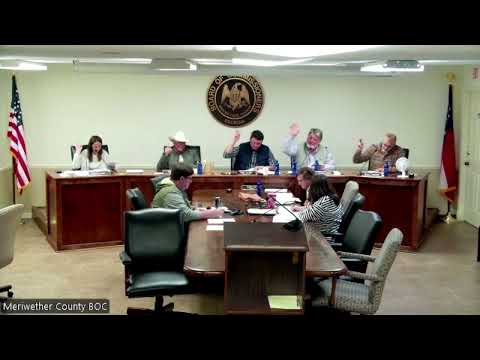
Meriwether County commissioners on Jan. 8 voted to install speed bumps and additional signage on a 1.75-mile stretch of Dunn Road and Warm Springs, responding to resident safety concerns. The board attached a spending limit of $10,000 to the measure and asked staff to monitor impacts and re-evaluate after an initial trial period.
Staff advised that installation costs for speed bumps generally remain below small procurement thresholds and that Public Works can perform some of the work in-house. Commissioners discussed trade-offs: residents’ requests to slow speeding drivers versus the potential impact on emergency responders (fire, ambulance, 911 response) and on heavier vehicles. Several commissioners suggested a six-month trial period to assess effectiveness and any unintended consequences for first responders.
Why this matters: The measure was requested by citizens for a local safety concern. The board balanced neighborhood safety against county-wide emergency response needs and set a modest cap to limit expenditure while allowing the trial.
Action taken: Motion passed to install speed bumps and slowdown signage on the identified stretch, not to exceed $10,000. Staff will install devices, monitor traffic and emergency-responder impacts, and report back to the board.
Ending: The board agreed to revisit the impact after the trial period; if problems arise (e.g., impeded emergency response), the board can remove or modify the installations.