Get Full Government Meeting Transcripts, Videos, & Alerts Forever!
Get email alerts on the Osha Recordkeeping Utah topic
No spam. Unsubscribe anytime.
Utah Local Governments Trust reviews OSHA recordkeeping rules, reporting deadlines for Utah public employers
Summary
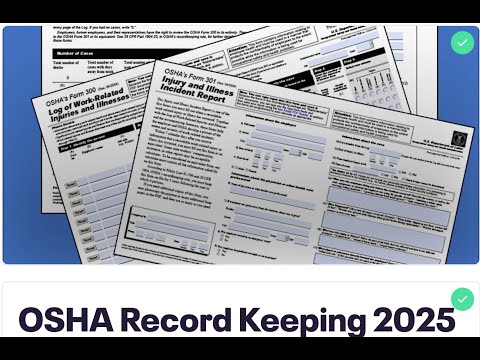
A Utah Local Governments Trust training session reviewed federal OSHA rules and Utah Occupational Safety and Health (UOSH) practice for public employers, covering what injuries must be logged, reportable incidents, posting and retention requirements, and who must submit data.
Jason (last name not specified), training presenter for the Utah Local Governments Trust, reviewed OSHA recordkeeping responsibilities for Utah public employers during a Trust training session, advising when to log injuries, when to report them to UOSH, and how to post annual summaries.
The presentation explained why employers keep OSHA records — it is a legal requirement and a tool to track incidents for prevention — and clarified the difference between federal OSHA and Utah Occupational Safety and Health (UOSH), the state program that enforces OSHA standards in Utah.
Jason said employers should “go to the horse’s mouth and see what the regulation says,” referring attendees to 29 CFR 1904 for the federal recordkeeping standard and noting that Utah’s UOSH administers those standards in the state. He drew a distinction between “recordable” injuries that must be entered on an OSHA 300 log and “reportable” incidents that must be phoned in to UOSH.
Key requirements summarized in the training included:
- Which incidents are recordable and which are reportable: recordable injuries go on the OSHA 300 log; reportable events (serious injuries, hospitalizations, fatalities or certain amputations and losses of consciousness) must be reported to UOSH, typically by phone, within the short timeframe UOSH requires (the presenter said eight hours for reportable injuries).
- Timeframes and retention: employers must enter recordable cases on the 300 log within seven days of learning of the injury and retain 300-series records for five years. The annual OSHA 300A summary must be posted where employees can see it from Feb. 1 to April 30.
- Workers’ compensation vs. OSHA recordability: the presenter explained these are separate determinations. Workers’ compensation claims must be submitted to the Utah Labor Commission within seven calendar days; not every workers’ compensation claim is OSHA-recordable and vice versa.
- Size and establishment rules: employers with fewer than 10 full-time-equivalent employees are generally exempt from keeping a 300 log, but certain volunteers (for example, volunteer EMS) and temporary workers who are supervised day-to-day can count toward that threshold. The Trust presenter emphasized that logs must be kept by establishment (each separate place of business), which is a common source of citations.
- Specific examples and treatment rules: the presenter reviewed what counts as medical treatment (which makes a case recordable) versus first aid (which does not). He noted that prescription medications, sutures/staples, surgical removal of foreign bodies and medical-grade tissue glue are treated as medical treatment; an elastic support is first aid while a rigid immobilizing brace is medical treatment. All need to be evaluated by the employer when deciding recordability.
- Privacy cases and employee access: certain sensitive cases (for example, HIV, hepatitis, sexual assault, or the employee’s request) may be entered on a separate privacy log. Employers must provide an employee access to their own record and must protect confidential information in the logs.
- Federal reporting and exemptions: the presenter said Utah governmental agencies that report under NAICS 92 (government, sometimes entered as 9200) are exempt from submitting 300A/300 data to federal OSHA, because UOSH administers the program in Utah. He cautioned that private employers and some industries still have federal electronic reporting obligations and that some establishments may receive a separate Bureau of Labor Statistics survey packet and must respond if selected.
Jason and co-presenter Mike offered practical advice: keep a hard copy of records available for an inspection, update the 300 log regularly as cases mature (including counting calendar days away from work but excluding the day of injury), work with medical providers on return-to-work restrictions, and contact the Trust for help generating reports or deciding whether a case is recordable. Mike noted the Trust can generate a list of workers’ compensation cases to help employers populate their 300 logs.
The presenters reiterated that UOSH staff may follow up on reportable events with phone contact or on-site inspection and that unnecessary reporting can prompt further scrutiny. They closed by directing attendees to training resources at utahtrust.gov and offering contact via the Trust’s published phone numbers and jason@utahtrust.gov for follow-up questions.