Get Full Government Meeting Transcripts, Videos, & Alerts Forever!
Get email alerts on the Health Care Liability Service Animals topic
No spam. Unsubscribe anytime.
Texas justices wrestle with whether doctor's letter about a service dog triggers health-care liability rules
Summary
At oral argument before the Supreme Court of Texas, lawyers disputed whether a physician's statements that a patient's dog was a 'service animal' fall within the state's health-care-liability statute (Chapter 74), touching on issues of scope of practice, causation/standing and what type of expert is required.
At oral arguments before the Supreme Court of Texas, lawyers for the parties in Biedman v. Waldroup debated whether letters from a physician certifying that a patient's dog performed tasks to treat her generalized anxiety disorder are "health care liability" claims under Texas law and therefore subject to Chapter 74 procedures.
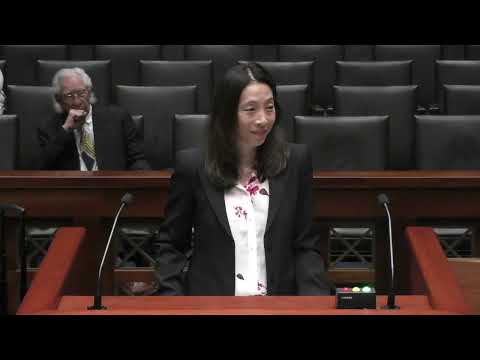
The question matters because if the court treats the statements as health-care-liability claims, the physician-defendant would be entitled to pre-suit procedural protections in Chapter 74, including the requirement for an expert report and potential abatement of proceedings. Petitioner counsel, Miss Chang, told the court the issue was "whether the Waldrops' claims ... are health care liability claims arising from the patient-physician relationship," arguing that the letter and the physician's representations about the dog are connected to medical care and therefore require medical-expert proof.
In response, respondent counsel, Miss Farrell, said the core of the plaintiffs' complaint is "the statement that doctor Liebman made about that dog, about Kingston. A vicious dog with a prior bite history that mauled our 3-year-old client," and argued the statements about the dog are separable from ordinary medical care. Farrell told the court that while a physician could document a diagnosis and need for a service animal, opining about a specific animal's training or safety goes beyond medical standards and would implicate veterinarians or animal-behavior experts rather than physicians.
Justices pressed both sides on two recurring points: (1) traceability/standing — whether the physician's letters can be shown to have caused or led to the incident that harmed a third party — and (2) whether any purported negligent statement about the dog is "inseparable" from the physician's medical services. Counsel on both sides used hypotheticals: one justice asked whether advising a patient to use a standing desk or recommending a particular brand of medication would be treated differently; respondents' counsel used such hypotheticals to underline that not every recommendation a doctor makes falls within Chapter 74.
Counsel also debated procedural consequences. The respondents argued that Chapter 74 provides for abatement and other pre-suit protections, noting the statute's abatement language (the transcript quoted that proceedings "shall abate all further proceedings against the physician ... until 60 days following the receipt of the required authorization"). Petitioners countered that the record lacks evidence tying the physician's letter to the injury and said it was unclear which expert a plaintiff could have retained before the dispute over whether the claim is a health-care-liability claim was raised.
The court also discussed practical litigation choices. One justice suggested that defendants in close cases often preserve their position by obtaining an expert report to avoid dismissal if the court later deems the claim a health-care-liability claim; respondent counsel replied that plaintiffs would not always know which expert to hire when their complaint centers on statements about a dog rather than traditional medical treatment.
No decision was announced at the argument'the case was submitted for decision after roughly an hour of oral argument and follow-up questioning. The dispute before the court highlights unresolved lines between administrative statements that physicians commonly provide (diagnoses and documentation for housing or accommodations) and affirmative assertions about third-party items or animals that may implicate nonmedical expertise.
The arguments show the court weighing three principal concerns: whether the physician's letter is factually and legally connected enough to the plaintiff's alleged injury to be a Chapter 74 claim; whether the content of the letter falls within the accepted standard of medical care (the type of inquiry that would ordinarily require a medical expert); and the procedural consequences if the court treats the claim as a health-care-liability claim (abatement, expert-report timing, and possible dismissal).
The court asked the parties to submit additional briefing or a letter on traceability/standing issues after argument. The case will return to the justices for decision on whether the Waldrops' claims are subject to Chapter 74 and related procedural rules.