Get Full Government Meeting Transcripts, Videos, & Alerts Forever!
Get email alerts on the Contract Law Mag5 Ofo Damages topic
No spam. Unsubscribe anytime.
Texas Supreme Court hears arguments in American Midstream v. Rainbow over MAG 5, OFOs and damages
Summary
At oral argument the Supreme Court of Texas considered whether operational flow orders (OFOs) and section 9.1 of a MAG 5 scheduling agreement excused American Midstream from performance and whether Rainbow Energy Marketing’s lost‑profits damages met Texas’s reasonable‑certainty standard.
The Supreme Court of Texas heard argument in American Midstream v. Rainbow Energy Marketing Corporation, a dispute over construction of a MAG 5 gas‑scheduling agreement and the effect of Transco operational flow orders (OFOs) on liability and damages.
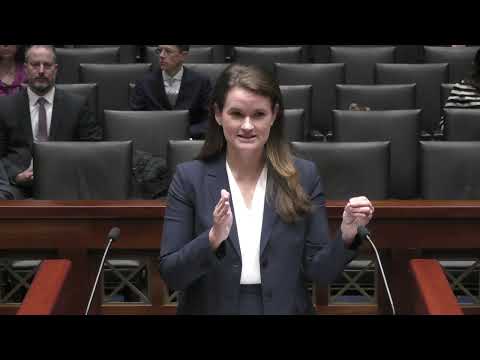
Counsel for American Midstream argued that the trial court misread section 9.1 of the parties’ MAG 5 agreement and effectively inserted the word “scheduled,” a change that, the petitioner said, “infected all of the trial court’s liability findings.” Miss Phan told the court that when Transco issued OFOs requiring shippers to balance receipts and deliveries, section 9.1 relieved American Midstream of its obligation to allow out‑of‑balance nominations under the MAG 5. She also said Rainbow’s damages model was speculative and lacked historical grounding: the model, she argued, had “absolutely no historic grounding” and Rainbow had never used the claimed trading strategy during 25 years of operations.
Alan York, arguing for Rainbow Energy Marketing, urged the court to affirm the trial court’s findings and judgment. York said the lower court properly considered industry custom and course of dealing to interpret the MAG 5 and disputed the petitioner’s factual premise that Rainbow was out of balance on Transco. “Rainbow was always in physical balance on Transco,” York told the court, and he said the OFOs in the record did not identify OBA parties and so did not bar Rainbow’s use of the MAG 5 in this case.
Justices questioned both sides about the contract language and related doctrines. The court explored whether the December 7, 2016 call between the parties could amount to repudiation of the contract or whether subsequent months of continued performance constituted a retraction or waiver. Counsel for Rainbow pointed to later nominations and conduct in December 2016 and January 2017 and cited Glass v. Anderson, 596 S.W.2d 507 (Tex. 1980), in arguing the trial court should consider continuing breaches and whether a prior material breach had occurred. Petitioners countered that once the contract is correctly construed, the record shows OFOs applied as a matter of law and there was no repudiation.
The arguments turned on several discrete legal points: the plain meaning of section 9.1 of the MAG 5 (and whether the trial court improperly inserted “scheduled”), whether OFOs directed to shippers triggered section 9.1 where OBA parties were not expressly listed, whether factual findings about single‑point (interconnect) versus point‑to‑point imbalances were supported by the record, and whether Rainbow’s lost‑profits model satisfied Texas’s requirement of reasonable certainty. Counsel disputed factual details in the record, including an instant message thread dated November 22, 2016 and company scheduling practices.
The court took the case under submission after oral argument and recessed. No opinion was announced at the hearing.