Get Full Government Meeting Transcripts, Videos, & Alerts Forever!
Get email alerts on the Dram Shop Liability topic
No spam. Unsubscribe anytime.
Supreme Court of Texas hears dispute over dram‑shop liability in Raegar Corp. v. Myers
Summary
The Supreme Court of Texas heard oral argument over whether a seller of alcoholic beverages is entitled to summary judgment when the record lacks evidence the patron "appeared obviously intoxicated to the extent that he presented a clear danger to himself and others."
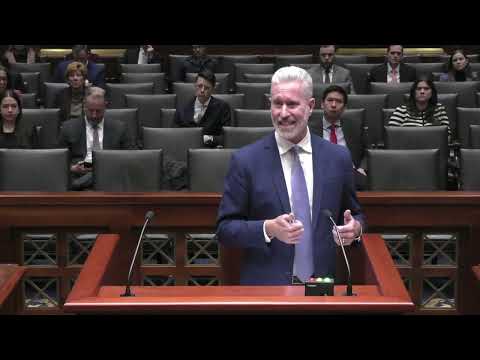
The Supreme Court of Texas heard oral argument over whether a seller of alcoholic beverages is entitled to summary judgment when the record lacks evidence the patron "appeared obviously intoxicated to the extent that he presented a clear danger to himself and others." Petitioner’s counsel, Steve Knight, argued the restaurant was entitled to judgment because “every witness knowledgeable about how the patron appeared both at the restaurant and after the restaurant confirmed that he looked and acted normal.”
The issue matters, the justices were told, because the state’s dram‑shop law imposes liability only when intoxication is apparent at the time of service; other measures, such as later blood‑alcohol readings, do not by themselves satisfy that statutory benchmark. "The legislature based liability solely and exclusively on how the patron appeared at the time of service," Knight said, adding that "the statute says we're only liable if at the time that we provide the alcohol...how did this man look?" Knight urged the court to reverse the court of appeals and render judgment for the seller.
Respondent counsel (identified in the transcript as Mr. Kieta) told the court the record supports sending the case to a jury. "The problem with my friend's argument is that he ignores the obvious fact that something can be apparent and also be ignored," Kieta said, arguing that a TABC‑trained bartender’s admissions about what intoxication looks like and a later blood‑alcohol test could create a genuine issue of material fact at the summary‑judgment stage.
The underlying factual record, as described at argument, contains disputed or uncertain points: the patron (identified in the record as Khan) opened a tab and closed it about 10:30 p.m.; testimony varied about how long he remained at or near the restaurant, with Knight noting that the tab and timestamps make it unlikely the patron consumed alcohol elsewhere, while opposing counsel said the summary‑judgment record does not contain proof about drinking at a private home later that night. The tab as described in argument reflected three drinks; the responding side’s expert estimated the patron could have consumed between about nine and 19 drinks in the relevant timeframe, and the bartender Jennifer Hadi acknowledged she might have served up to four drinks and that she had received Texas Alcoholic Beverage Commission (TABC) training about signs of intoxication.
A law‑enforcement witness, Officer Williams, testified at the scene that he "could not tell by this man's appearance that he was intoxicated at all," counsel said; Williams also detected the smell of alcohol and later performed a horizontal gaze nystagmus (HGN) test that contributed to a hospital blood draw that showed a blood‑alcohol concentration reported in argument at about 0.13–0.139 several hours after the incident. Counsel debated whether a retrograde extrapolation from that BAC or an expert’s estimate of drinks consumed can generate the kind of contemporaneous observable signs the statute requires or, instead, are merely circumstantial evidence that must be weighed by a jury.
Justices asked hypotheticals about whether sheer quantity of drinks (for example, dozens of shots) or a high retrograde BAC would, as a matter of law, make intoxication "apparent" to a provider. Knight maintained the statute requires observable intoxicated behavior—stumbling, slurred speech, visible impairment—at the time the alcohol is provided, and that nothing in the record here shows such signs at the restaurant or at the accident scene. Kieta argued a TABC‑trained server’s testimony that a patron at a given BAC or who consumed a large number of drinks would display specific signs could be sufficient, combined with expert opinion and the BAC result, to defeat summary judgment.
Counsel cited prior decisions and doctrinal points during argument. Participants referenced the dram‑shop statute and several cases, including Graff v. Beard, El Chico, the Davis line of cases, and City of Keller v. Wilson, as the parties and justices debated standards for circumstantial proof, expert testimony and the safe‑harbor effect of TABC training.
The court did not issue a decision at the argument. After roughly the completion of both sides’ time, the court took a brief recess and reserved ruling for a later date.