Get Full Government Meeting Transcripts, Videos, & Alerts Forever!
Get email alerts on the Usury Interest Calculation topic
No spam. Unsubscribe anytime.
Texas Supreme Court Hears Argument on How to Calculate Usury: Amortization on Declining Balance or Total Principal?
Summary
The Supreme Court of Texas heard argument in case No. 24-0759, American Pearl Group v. National Payment Systems, a certified question from the Fifth Circuit about whether Texas Finance Code §306.004(a) requires calculating maximum allowable interest using an actuarial method based on the loan—s declining principal balance or on the total principal.
The Supreme Court of Texas heard argument in case No. 24-0759, American Pearl Group v. National Payment Systems, a certified question from the U.S. Court of Appeals for the Fifth Circuit about how to compute the maximum allowable interest on certain commercial loans under Texas law.
The question before the court asks whether, when a loan requires periodic principal payments, ‘‘computing the maximum allowed interest rate by amortizing or spreading using the actuarial method’’ requires using a declining principal balance for each payment period rather than the total original principal. Appellant counsel told the court the statute requires the declining-balance calculation and that the district court—s contrary approach ignored statutory text and an amortization schedule in the loan documents.
Why it matters: The way the court resolves the certified question affects whether loans like the one at issue are deemed usurious and what remedies follow. Counsel told the court the loan at issue carries an effective rate the appellants calculate as roughly 34.5 percent over a 42-month term, which they say exceeds the commercial-loan limit cited in the record. If the court adopts the appellant—s view, lenders who structure loans the same way could face statutory penalties, whereas a contrary ruling could leave the challenged agreements enforceable under the parties— chosen calculations.
Arguments for appellants
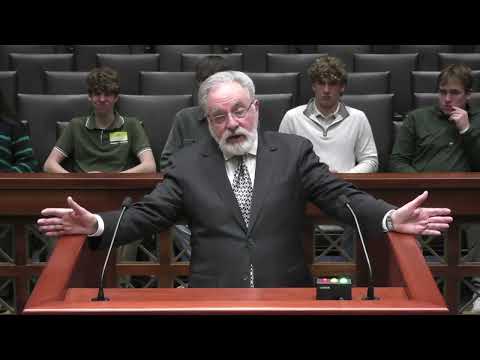
Appellant counsel (identified in the record as Mister Katanzaro) told the court "the answer is a resounding yes," arguing Texas Finance Code §306.004(a) unambiguously requires the actuarial method and that method, as commonly understood, applies interest to the outstanding balance after each payment (crediting payments first to interest, then to principal). He said the district court—s calculation multiplied a stated rate by the full original principal over the loan term and thus "ignored any reduction of principal," contrary to the statute and to accepted actuarial practice. Appellants also told the court an attached exhibit (identified in the record as Exhibit G, record pages 514—515) includes their amortization schedule and their calculation of the allegedly usurious interest.
Appellants additionally raised a second issue the Fifth Circuit returned for factfinding: whether an option or purchase agreement tied to the loan functions as additional interest ("bargain purchase"), which counsel said could further raise the effective rate and compound statutory penalties.
Arguments for appellees
Appellee counsel (identified as Mister Kessler) urged a different reading. He said the statute—s language—"amortizing or spreading using the actuarial method"—must be read together and in light of Texas precedent, which long has used spreading to address variable-rate and complex loans. Kessler told the court that prior Texas jurisprudence and practical considerations support a spreading approach that can evaluate variable inputs over the loan—s life and that a bright-line declining-balance rule could reintroduce uncertainty or require expert calculations in every case. He argued that reading the statute to require declining-balance amortization in all cases would disrupt the legislative compromise embodied in the current statutory text.
Choice-of-law and procedural posture
Several justices asked whether Oregon law might govern the parties— contract; the district court had noted the loan agreement invoked Oregon law and had stated that either Oregon or Texas law would reach the same result. Appellate counsel disagreed on the record—s characterization of that choice-of-law question: appellants said Texas law should apply to this transaction; appellees emphasized that if Oregon law in fact governs, the differences could be determinative. Both sides acknowledged the Fifth Circuit certified the Texas-law question to this court, and counsel discussed how a decision here could affect subsequent proceedings in the federal courts.
Remedies and stakes
Counsel and the court discussed remedies available under Texas usury law. Appellants emphasized that the statute authorizes significant penalties, and they portray the issue here as one that could lead to substantial forfeiture of interest and other statutory remedies if the loan is deemed usurious. Appellees warned of the uncertainty that could follow a rule forcing complex actuarial calculations in routine contract disputes.
Proceedings and next steps
No decision was reached at argument. The court heard answers and extensive questioning, and both sides filed and discussed exhibits in the record. At argument—s close the court announced the case submitted. The court's forthcoming opinion will decide whether the actuarial method in §306.004(a) must be applied on a declining principal (amortization) basis in loans that require periodic principal payments, or whether the statutory phrase allows a different spreading analysis consistent with Texas precedent and practical administration. The ruling will determine whether the loan at issue is usurious under Texas law or whether choice-of-law or the loan—s particular terms preclude that result.