Get Full Government Meeting Transcripts, Videos, & Alerts Forever!
Get email alerts on the Capital Planning And Cte topic
No spam. Unsubscribe anytime.
Northwest Allen County Schools presents $170 million next-decade plan; says operating referendum needed to staff new CTE facility
Summary
District leaders presented a multi-project, multi-year capital plan that includes a career-and-technical-education (CTE) and alternative school facility and a new transportation center. Administrators said they will ask the board to pursue an operating referendum in November 2025 to fund ongoing CTE operations if the board pursues the projects.
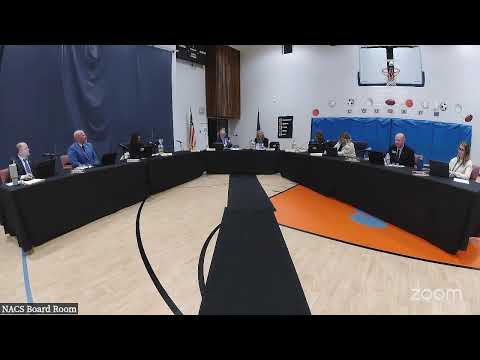
Northwest Allen County Schools administrators presented a draft 10-year capital plan to the Board of School Trustees at the district’s reorganizational meeting, outlining multiple building projects with an estimated total near $170 million and a timeline that could open a CTE and alternative-school facility for the 2027 school year.
The presentation, led by Superintendent Wayne Barker and district staff, included cost and timeline estimates for a CTE/alternative-school facility, a transportation center, a natatorium, athletic turf projects and a possible ninth elementary school. Administrators said the projects are estimates and that the district plans staggered issuances and multiple years of work rather than a single, immediate bond package.
Administrators said the district’s worksheets add to roughly $164 million in project estimates, a figure the district used when discussing a roughly $170 million “worst-case” scenario. “I just want to reiterate to everybody that these are estimates,” Mr. Basham said during the slide presentation. The district also told the board it models assessed value growth conservatively at 5% even though recent actual growth averaged higher.
Why it matters: district leaders said the CTE facility is meant to expand hands-on career and technical education and to align with new graduation requirements that emphasize work-based and career-focused experiences. Administrators said they do not have the operating funds to staff expanded CTE programming without voter approval of an operating referendum.
What administrators told the board
Superintendent Barker said the district will ask the board to commit to pursuing an operating referendum in November 2025 if the board decides to move forward with building projects that require new ongoing staffing and program costs. “We cannot build and operate the new CTE facility without an operating referendum,” Barker said. He said a successful referendum would allow the district to add staff and programming that the facility would house.
District staff walked trustees through the project timelines used to generate the cost estimates. Dr. Bidding described the planning and procurement phases that precede construction: securing a construction-manager-as-constructor (CMC), schematic design, design development, construction documents, preliminary determination and project hearings, bid solicitation and then construction. He said the district’s schedule assumes roughly 14 months from RFP issuance to groundbreaking for major projects and then about 17 months of construction for the CTE/alternative-school facility.
“If all of this plays out and we start now, you can see that that alternative school and CTE facility would be open and ready for business at the start of the 2027 school year,” Dr. Bidding said.
Administrators and a presenter also described potential programs that could be offered in a new CTE facility. Those possibilities included construction trades (carpentry and electrical), veterinary medicine, criminal justice, fire/EMS or EMT training and expanded culinary programs. The district said the facility is intended to serve a broad range of students and to make local CTE programming more accessible to students who now have transportation or scheduling barriers.
Costs and tax impact
Presenters reiterated the district’s $170 million figure as a long-range, conservative planning number. The slides and discussion noted that if projects were structured in a particular way, a scenario presented to trustees showed an estimated worst-case tax-rate impact in the neighborhood of six cents (the presentation used 6.6¢ as an illustrative worst-case), though staff emphasized that final rates depend on bonding structure, actual bids, and assessed-value growth.
Next steps proposed by administration
Administrators asked the board to consider approving requests for proposals (RFPs) for construction-manager-as-constructor services and for architects on the CTE/alternative-school and transportation projects at upcoming meetings. They said staff will return with formal motions and additional financial detail before any bonding or referendum questions are finalized.
Board response and context
Board members thanked staff for the timeline visuals and asked clarifying questions about the bidding calendar and potential benefits of a CMC process for contractor-subcontractor coordination. Christie Schlatter and other trustees raised concerns about timing and the need for detailed cost information before any formal bond or referendum action.
No formal bond or referendum vote was taken at the meeting. Administration stated it would bring formal RFP and referendum-related motions to a future meeting for the board’s action.
Bottom line
District leaders presented a multi-year capital plan centered on a CTE/alternative-school facility and a transportation center and said a November 2025 operating referendum would be required to staff an expanded CTE program. Staff recommended moving forward with procurement steps (RFPs for CMCs and architects) at subsequent meetings so the district could meet the presented timelines if the board so chooses.