
Committee hears bill to bar simultaneous service on local planning and zoning boards
Get AI-powered insights, summaries, and transcripts
Subscribe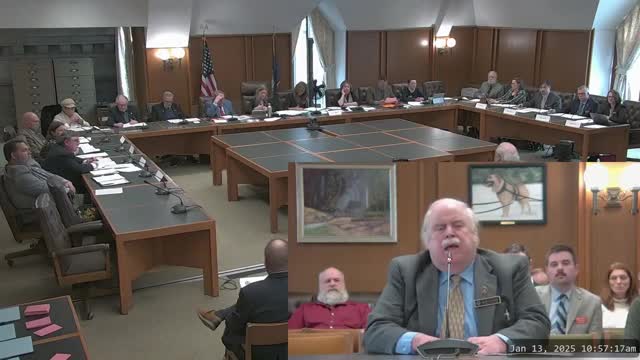
Summary
Sponsor said the bill prevents perceived conflicts when the same person serves on both planning and zoning bodies; witnesses discussed alternatives such as required recusals and effects on volunteer recruitment.
House Bill 92, heard Jan. 13 by the Municipal and County Government Committee, would prohibit an individual from simultaneously serving on a local planning board and zoning board (or other local land‑use boards) to avoid perceived separation-of‑powers conflicts at the municipal level.
Representative Joe Alexander, prime sponsor, told the committee the bill responds to a concern that an individual who sits on both boards could undermine fairness when a planning‑board decision is appealed to the zoning board. Alexander said the last time a similar measure was introduced was 1993 and the prior committee recommended it be ITL (inexpedient to legislate) because local mechanisms already existed; he argued a statewide rule would ensure consistent practice across municipalities.
Witnesses and committee members debated alternatives. Representative David Frakt and others asked whether mandatory recusal from the second board when issues overlap would achieve the same aim without restricting volunteers. Frakt suggested recusal rules might be sufficient; Alexander said recusal could help but noted that existing statutes already restrict dual membership in other cases and argued a consistent statewide standard was warranted.
Committee members flagged practical issues: smaller towns that appoint rather than elect land‑use board members may face recruiting challenges; Representative Julie Gilman asked whether limiting cross‑service could worsen volunteer shortages and whether appointed selectboard liaisons or nonvoting members could bridge expertise between bodies. Representative Elward raised questions about statutory definitions of “local land‑use board” and whether the bill’s language overlaps with existing RSA 672:7 definitions.
Public testimony included a constituent account of local land‑use decisions and concern about boards both drafting and adjudicating ordinances. Senator James Gray filed an amendment to clarify domicile and vacancy language in a related bill discussed later in the hearing; committee members asked whether similar clarifying amendments should be considered for HB 92.
The committee took testimony and closed the hearing; no amendments or votes were taken at the Jan. 13 meeting.