Citizen Portal
Sign In

Prosperity Denver Fund reports $18.6 million distributed in 2024 and outlines reserve spending plan

Loading...

AI-Generated Content: All content on this page was generated by AI to highlight key points from the meeting. For complete details and context, we recommend watching the full video. so we can fix them.

Summary

The committee received a briefing from Prosperity Denver Fund on 2024 grant activity, program expansion under a 2023 ordinance change, evaluation findings, and a board plan to reduce reserves while preserving funds for a potential sunset scenario.

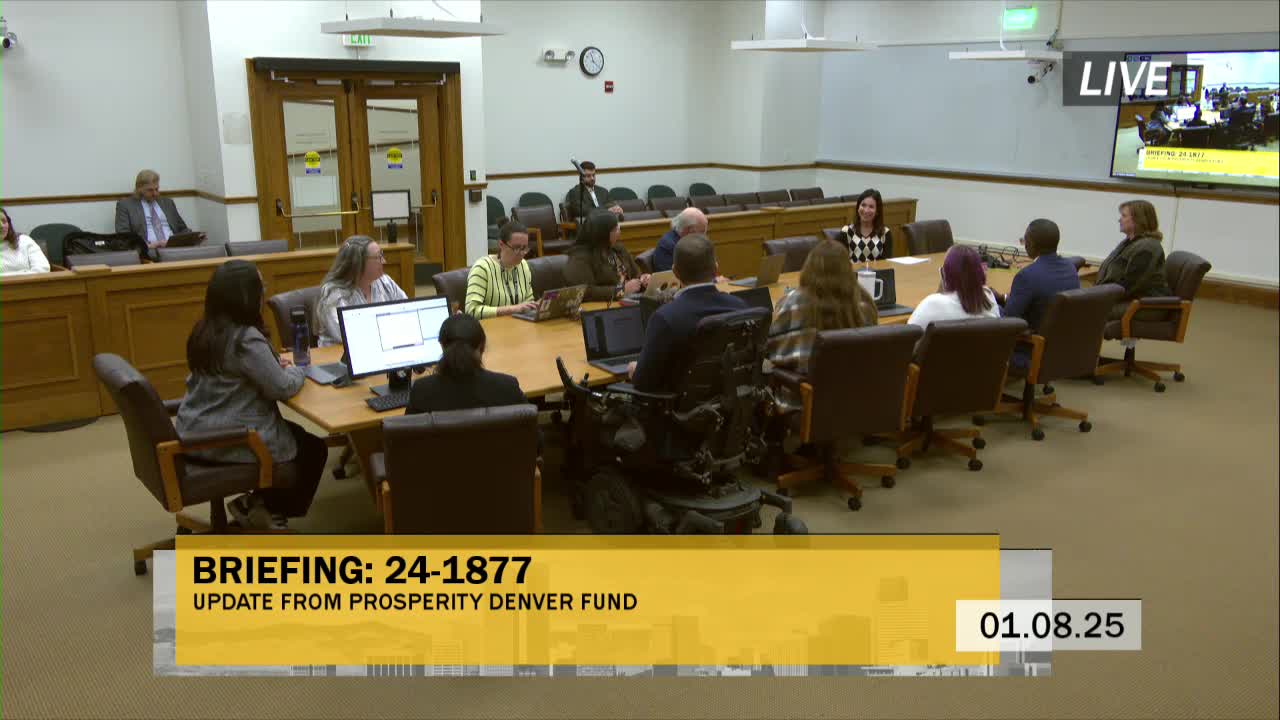
On Jan. 8, 2025, the Safety, Housing, Education and Homelessness Committee received a briefing from Prosperity Denver Fund leadership on the program’s 2024 spending, expansion of services and a multi‑year reserve plan.

Rebecca Arnaud, chief executive officer of Prosperity Denver Fund, and Theresa Pena, chair of the fund’s board, told the committee that Prosperity Denver — created after a 2018 ballot initiative and established by ordinance in 2019 — provides reimbursements to nonprofit partners who deliver scholarships, support services and credential/apprenticeship pathways to Denver students ages 14–30. Arnaud said the fund worked with 64 organizations in 2024, funded more than 12,000 scholarships, served over 37,000 students, and has distributed close to $48 million since inception. In 2024 the fund distributed $18.6 million, a step up from $8 million in 2023 after the council expanded the ordinance’s scope last year.

Arnaud described the 2023 ordinance changes that allowed Prosperity Denver to fund high‑school support services, industry‑recognized credentials and apprenticeships, and to serve Denver students up to age 30. She said the board is now implementing a reserve‑spending plan that used $2.6 million of reserves in the last cycle and aims to reduce total reserves to a “prudent reserve” of $16 million by the end of fiscal year 2027. The board plans to hold $15 million as a sunset reserve to ensure ongoing payments to students if the ordinance is not reauthorized, plus $1 million to cover possible city sales‑tax overpayment adjustments.

The briefing included evaluation findings Prosperity Denver commissioned. Arnaud summarized a University of Colorado Leeds School of Business economic impact analysis that estimated college attendance and graduation rates have risen about 8 percentage points per year for students served by the program, and ProSono’s evaluation signaling reduced student debt and improved student preparedness through increased scholarship awards and support services.

Council members asked questions about revenue and budgeting, partner organizations, outreach and how awards are distributed. Arnaud and Pena said the fund receives approximately $15 million per year in sales‑tax revenue on average; 2024 distributions exceeded that level while the board began spending down reserves. The board estimated it would need to distribute about $20.4 million in a future cycle to align with its reserve plan. Arnaud said the fund reimburses nonprofits (a reimbursement model), which can slow disbursement to smaller community organizations, and that staff are exploring ways to coordinate with city workforce and training programs such as DETO and unions to expand credential pipelines.

Several council members praised the fund’s recent growth and asked for additional evaluation reports and district‑level data. Councilmember Diana Romero Campbell, who represents the council on the Prosperity Denver board, noted progress responding to prior city auditor findings and said the board has focused on stronger reporting and faster distribution. Arnaud said staff will share the full CU‑Leeds and ProSono studies and provide district‑specific partner lists to council offices.

The fund’s strategic priorities for 2025–27, Arnaud said, are expansion, data and impact, implementing the 2023 ordinance changes, and building a centralized resource for students exploring post‑secondary and credential pathways.

Councilmembers requested follow‑up on specific topics including: the list of new partners added after the 2023 ordinance change; the fund’s district‑level student counts; and options to reduce or eliminate the post‑conviction monitoring fee discussed earlier in the meeting. Arnaud and Pena said they would return with additional data and follow‑up reports as requested.