Get Full Government Meeting Transcripts, Videos, & Alerts Forever!
Get email alerts on the Utilities Water Infrastructure topic
No spam. Unsubscribe anytime.
Odessa utilities staff outline $1 million valve assessment and pump planning amid water-loss concerns
Summary
City utilities staff reported a roughly $1 million system assessment, said the study should finish by August 2025, and recommended a valve-replacement prioritization and pump assessment after officials described areas losing pressure and water.
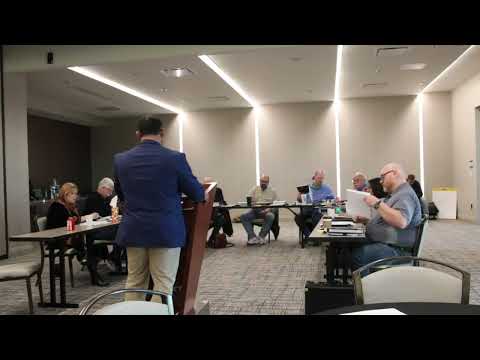
Alex Rumlett, utilities presenter, told the City of Odessa workshop that the utilities department is completing an assessment of valves and related infrastructure and expects the assessment work to finish in August 2025. “We’re currently … more than 20 now, but it looks like we’re gonna finish in August of 2025,” Rumlett said during the update.
The presentation focused on a phased replacement plan that would first address “critical valves” and then scale to larger replacement work. Rumlett said the department also plans a pump assessment to determine whether vertical turbine pumps are suitable for some pump stations; that assessment would inform a five-year plan on pump upgrades and station improvements.
City staff described operational impacts the department is seeing now. Rumlett said some parts of the system must be taken offline during repairs, and that the city is “only able we have to shut down our farms at the 50%,” which the department presented as a constraint affecting clear-well levels and pump performance. He said clear wells are measuring about 15 to 16 feet across three wells and that lower levels can affect pumps and distribution pressure.
The update noted that the current water-treatment facility could meet demand if specific pressure and maintenance needs are addressed, but detailed projects — including whether to replace or retrofit pumps and how to sequence valve replacements — will follow the assessment and the pump study. Staff also referenced a broader facility master plan tied to longer-term decisions about treatment capacity and a cited $55,000,000 estimate that would be associated with larger-scale work on the treatment plant.
The utilities presentation was technical and staff framed the next steps as assessment, prioritization, and phased implementation rather than firm procurements or construction starts. No formal vote or contract award was recorded during the workshop.
The presentation was part of a wider agenda that also included staffing and department updates from other city divisions.