Get Full Government Meeting Transcripts, Videos, & Alerts Forever!
Get email alerts on the Fire Services topic
No spam. Unsubscribe anytime.
Fire chief cites staffing, station network and a shortfall of recurring funding for CHAP
Summary
Portland Fire & Rescue officials described daily staffing levels, station counts and the CHAP medical-diversion program’s funding uncertainty; the bureau also sent a strike team to assist California wildland firefighting.
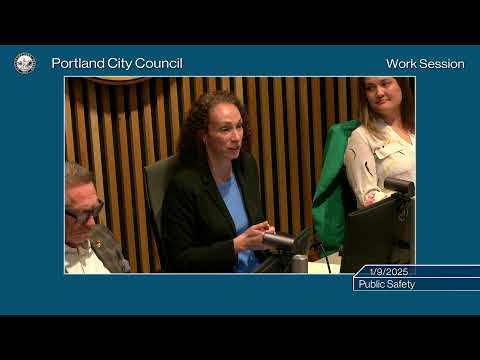
Portland Fire & Rescue Chief Ryan Gillespie told councilors Jan. 9 that the bureau operates 31 stations with daily staffing of 171 firefighters and that the workforce has not materially expanded to match population growth and increasing service demand.
Gillespie compared Portland’s daily staffing with Denver’s, saying Denver staffs about 199 firefighters daily and operates 39 stations, and he said Portland has chosen to fill gaps with overtime rather than close neighborhood stations. He told councilors that adding firefighters has helped reduce backfill overtime hours by about 19% so far this fiscal year.
The bureau continues to develop CHAP, a proactive pre-hospital medical intervention that includes an overdose response team and a pilot to administer buprenorphine. Gillespie said CHAP’s 24 non-sworn limited-term positions are funded for the program but that CHAP lacks ongoing, stable funding and has been sustained by one-time city allocations and CareOregon grants.
Gillespie also confirmed Portland deployed three engines, 13 firefighters and a battalion chief (Jason Kelly) as part of a Multnomah County strike team to support wildland firefighting in California. The strike team left the Portland area the prior day and was expected to arrive at noon the following day, he said.
The chief said the bureau continues to press for long-term capital funding for training and logistics facilities, and that the bureau is focused on recruiting and training classes to replace retiring staff and maintain response capacity.