Get Full Government Meeting Transcripts, Videos, & Alerts Forever!
Get email alerts on the Finance topic
No spam. Unsubscribe anytime.
Researchers tell Senate Finance Committee that legalized online sports betting is linked to measurable declines in household financial health
Summary
Three academic presentations to the Minnesota Senate Finance Committee summarized large datasets showing small-average but meaningful increases in bankruptcies, delinquencies and reduced credit access after states legalized sports betting — with larger effects where mobile/online wagering is permitted.
Researchers told the Minnesota Senate Finance Committee that legalizing sports betting — and especially online, mobile wagering — is associated with measurable declines in household financial health.
In testimony to the Senate Finance Committee, Dr. Brett Hollenbeck, a researcher presenting work using the University of California Consumer Credit Panel, said his team followed roughly 4 million people from 2016–2023 and found a small but statistically significant decline in average credit scores, increases in use of debt-consolidation loans and an elevated bankruptcy rate in states that legalized sports betting. "By the end of about three years after sports betting becomes legal, there's a significant decrease in the average credit score," Hollenbeck said, and he added the credit-score effect is roughly three times larger in states allowing online betting.
The nut graph: the witnesses emphasized that the average effects are measured across entire state populations — not only among people who bet — and therefore understate large harms concentrated among people who develop problematic gambling behavior. The researchers said online/mobile access amplified harms compared with in-person–only regimes.
Professor Hollenbeck said the declines are modest in population averages (about a 1 percent drop in credit-score measures, roughly seven points) but cross several financial indicators. He testified to about a 9 percent rise in use of debt consolidation loans, an 8 percent increase in debt sent to collections (about $30 on a mean of $360), and a roughly 27 percent increase in bankruptcy filings in states allowing online wagering compared with states that did not. He offered a back-of-the-envelope estimate that the observed increases could translate to about 30,000 additional annual bankruptcies or roughly $8 billion in added debt sent to collections across states that legalized sports betting during the study period.
Professor Scott Baker of Northwestern University presented anonymized bank and credit-card transaction evidence for several hundred thousand U.S. households. Baker said about 7 percent of the population in his sample engaged in sports betting after legalization; most bettors deposited repeatedly, with roughly 40 percent depositing more than ten times in the observed window. He described large declines in long-term investment activity (retirement and brokerage deposits) following the start of betting activity: "every dollar of betting that we observe for individuals leads to about a dollar decline in net investment," Baker said, and warned the losses were concentrated among financially constrained households.
Baker and Hollenbeck both emphasized that their data do not identify which individuals specifically placed bets (Hollenbeck's credit-panel data lacks that linkage), so they report average, population-level changes and caution that much larger harms will be concentrated in smaller groups of problem gamblers.
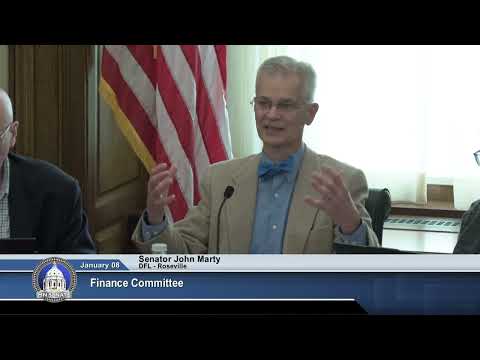
Committee members asked clarifying questions: Senator Johnson Stewart and others confirmed with the researchers that the datasets record deposits and financial flows (deposits to wagering accounts) rather than precise in‑platform wins and losses. Baker explained deposits are observed and that repeated deposits are a signal consistent with losses, but the transaction data do not reveal internal sportsbook accounting or player win/loss sequences.
The presentations stressed the distinction between in-person-only legalization and allowing mobile/online wagers. Hollenbeck and Baker reported consistently larger adverse effects in jurisdictions that allow mobile betting.
Ending: The committee received these studies as informational evidence to accompany testimony from treatment providers and people in recovery. No formal action or vote was taken during the hearing; committee members said they would consider the academic evidence alongside other policy, revenue and consumer-protection arguments as discussions continue.