Get Full Government Meeting Transcripts, Videos, & Alerts Forever!
Get email alerts on the Juvenile Justice And Truancy topic
No spam. Unsubscribe anytime.
Human services officials say ChINS teams aim to keep students out of juvenile system but staffing is limited
Summary
The department said the Children in Need of Services (ChINS) teams are small, zone-based units that focus on early intervention to avoid child welfare or juvenile justice involvement; lawmakers raised concerns about coverage and confusion among schools over roles and responsibilities.
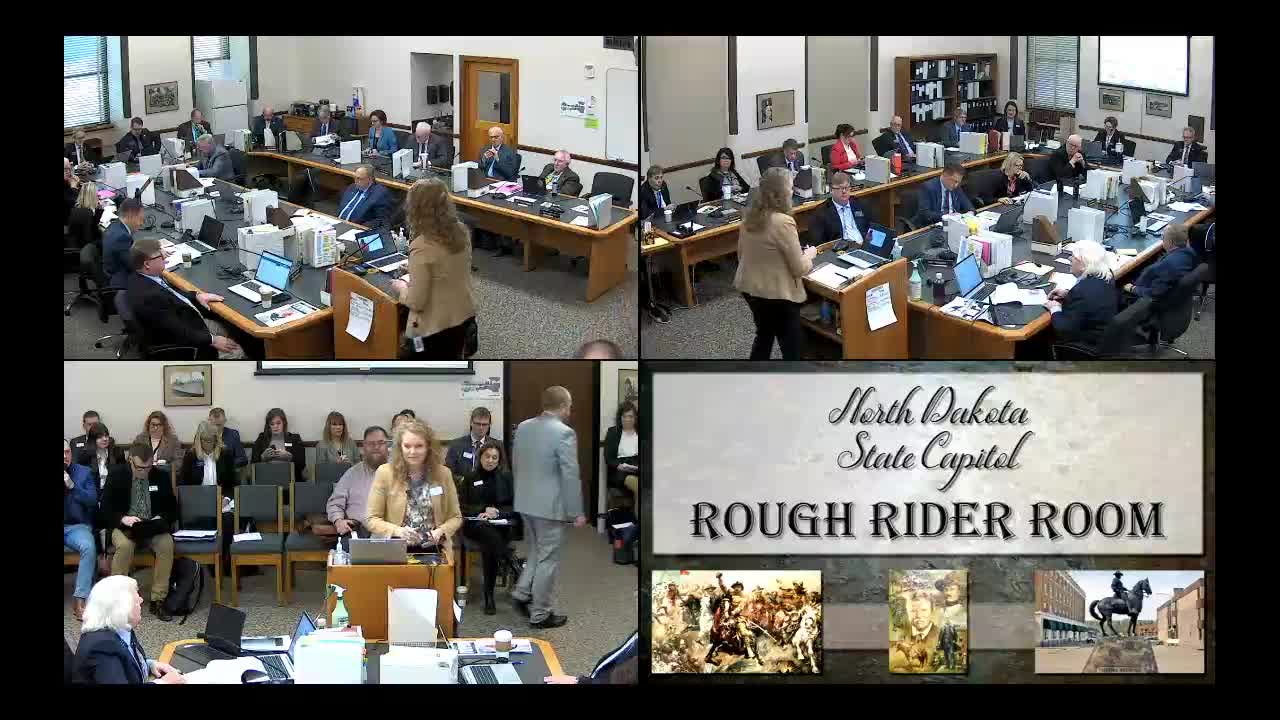
Jessica Thomason, executive director for Human Services at the Department of Health and Human Services, told the House Appropriations Committee that North Dakota’s ChINS program is designed to intervene on age-related issues such as chronic absenteeism before students enter the child welfare or juvenile justice systems.
“ChINS work … the work hasn't changed significantly since before juvenile justice reform,” Thomason said, adding that ChINS staff “are employed by human service zones” and that the teams currently are very small.
Why it matters: Several lawmakers said they have received complaints from K–12 educators who believe ChINS is meant to address broad truancy problems, and that lack of clarity about roles — among schools, juvenile justice, law enforcement and human services zones — leaves districts and families uncertain about who responds and when.
Thomason described ChINS as early-intervention teams that work “with kids and families before they enter the child welfare system, before they enter the juvenile justice system,” emphasizing the program’s preventive intent rather than a blanket replacement for district truancy policies.
Lawmakers asked for data and clearer definitions. Representative Murphy, among others, told committee members he had heard the statewide ChINS team consists of roughly eight people — a figure Thomason confirmed in describing the program as having only “a team of, like you said, 8 people from across the state.” She also said that while the ChINS teams are not intended to own all truancy work in every school, they will partner with schools and zones on a case-by-case basis.
Thomason and other HHS officials told the committee that the department expects a forthcoming legislative policy bill on chronic absenteeism and that they will provide detailed figures, including counts of affected children, during the division overview. Thomason asked lawmakers to forward specific questions to members of the HR section so the department can provide thorough responses in the planned division hearings.
Ending: The department said it will return with a more detailed division-level briefing and specific counts of children affected by chronic absenteeism and ChINS interventions.