Get Full Government Meeting Transcripts, Videos, & Alerts Forever!
Get email alerts on the Public Transit topic
No spam. Unsubscribe anytime.
Lawmakers hear proposal for one-time transit grants to expand paratransit and rural service
Summary
Representative Munson introduced a one-time $2 million appropriation request to support public and paratransit services across the state; local advocates and Bismarck officials testified about long-term financial strain on paratransit and the effects on people with disabilities and workers dependent on transit.
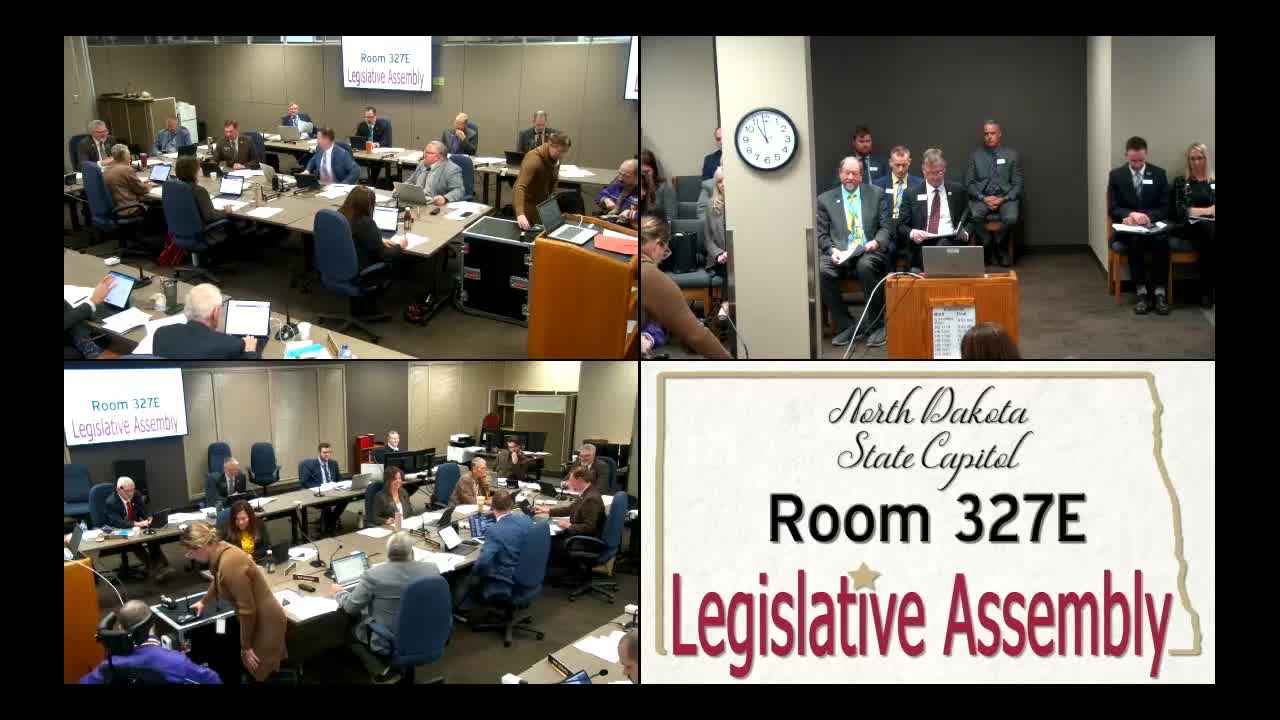
A proposal to provide one-time state funding for public transit and paratransit services drew supporters from disability advocates, local transit officials and city leaders during a Transportation Committee hearing.
Representative Mike Munson introduced House Bill 1106 as a broad appropriation request—$2,000,000 in the sponsored draft—to supplement federal and local transit dollars and to expand service for people who rely on door‑to‑door paratransit or who lack reliable transportation to jobs and medical appointments.
Munson said the request grew from conversations with community advocates and transit operators. “There’s a need,” he told the committee. “My mother is in a wheelchair. She is in a nursing home, and they have a van to get them to doctor's appointments and things like that, but their van is broke down a lot of times, and they need a new van.”
Kirsten Devark of The Arc of North Dakota said the organisation supports the bill and urged lawmakers to consider adding program criteria that explicitly address the needs of people with disabilities and extended service hours.
Trevor Vannett and Ben Arath, who described operational experience with Bismarck Transit, urged attention to paratransit operations. Bismarck officials said paratransit (dial‑a‑ride, door‑to‑door service) has historically required a higher per‑rider subsidy and was operating at a structural deficit before COVID infusions helped temporarily. Ben Arath said the pandemic-era funding “kicked the can” but that the system could be unsustainable once federal one‑time funds run out.
Advocates noted practical gaps: limited evening and holiday service reduces access to work shifts and medical care; farebox revenue covers a small share of operating costs and raising fares risks losing riders and federal formula funding tied to ridership.
Several advocates urged the committee to target any appropriation toward paratransit, expanded hours and accessibility improvements rather than general operating subsidies for fixed‑route systems. The committee did not take action on the bill; members suggested staff and sponsors work on program eligibility, geographic distribution and metrics to prioritize need before the proposal reaches appropriations.