Get Full Government Meeting Transcripts, Videos, & Alerts Forever!
Get email alerts on the Contracts Liability topic
No spam. Unsubscribe anytime.
Committee backs bill to give agencies clearer authority on low‑value click‑through contracts
Summary
Risk Management and OMB told the committee Senate Bill 2072 would allow agencies a statutory framework to accept click‑through and end‑user license agreements for low‑value services and raise the de minimis threshold from $1,000 to $20,000; the committee voted a due pass recommendation.
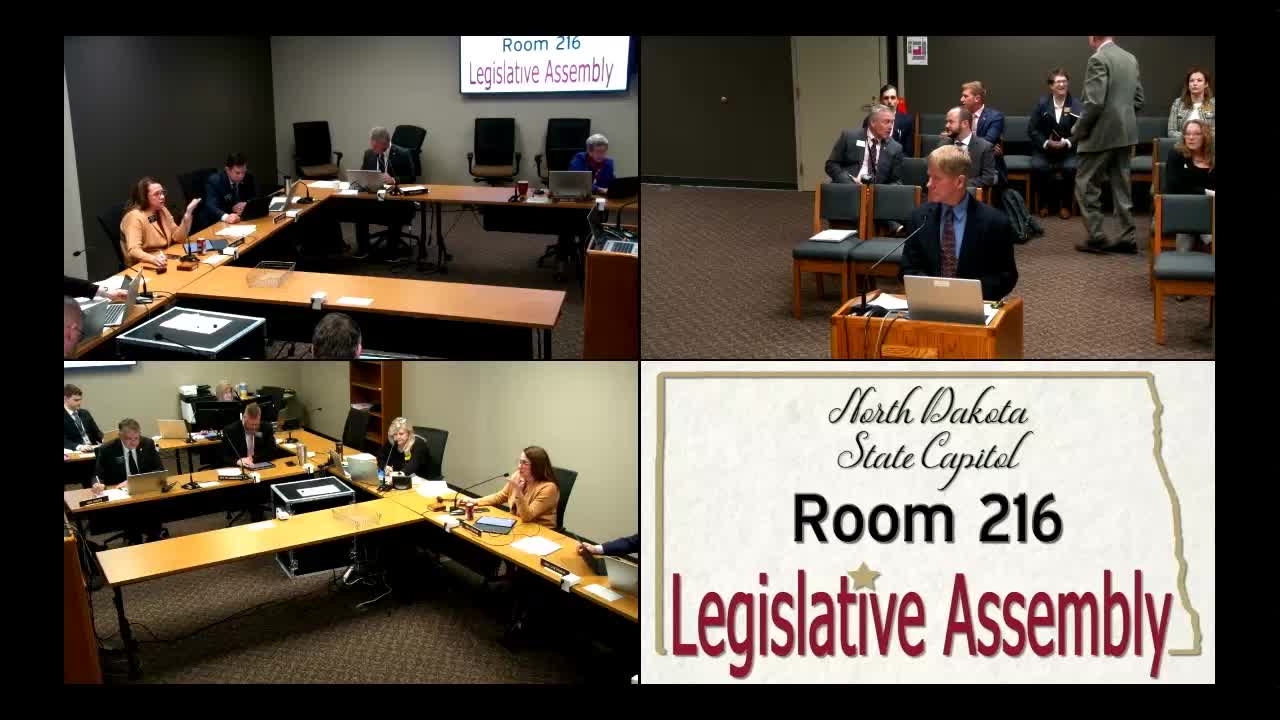
The State and Local Government Committee voted a due‑pass recommendation on Senate Bill 2072 after hearing from the Office of Management and Budget’s risk management director about how the state handles click‑through and end‑user license agreements.
Tog Anderson, director of the Risk Management Division at OMB, explained the bill is intended to address the state’s exposure to problematic contract terms in commonly used web‑based or free services and to provide a consistent statutory process for handling those agreements. Anderson said agencies and assistant attorneys general currently evaluate terms—like forum‑selection or waiver of sovereign immunity clauses—on a case‑by‑case basis and sometimes proceed when the actual use poses little or no risk that such terms would ever be enforced.
The bill would (per testimony) raise a low‑value threshold from $1,000 to $20,000 to give agencies and NDIT flexibility to accept certain low‑value agreements without full procurement negotiation. Anderson said the $20,000 number is intended to create a practical ceiling for low‑value transactions; he acknowledged it was not a magic number but a policy choice to reduce transactional friction for small purchases and free services used by state employees.
After testimony, Senator Brownberger moved a "do pass" recommendation and the committee recorded roll‑call votes. The clerk called the roll with Chair Christian Rohrs, Vice Chair Jose Castaneda, Senators Barta, Brownberger, Lee and Wallen all voting aye; the motion passed (6‑0 on the record as "Aye"). Senator Barta volunteered to carry the bill to the floor.
Anderson offered an illustrative example of the practical problem: employees using a free web polling service for an agency meeting encountered a click‑through with broad jurisdiction and limitation‑of‑liability clauses that, while unlikely to be triggered by the state's use, would be inconsistent with the attorney general’s legal guidance if taken at face value. The bill provides a statutory framework to balance operational needs with legal protections.