Get Full Government Meeting Transcripts, Videos, & Alerts Forever!
Get email alerts on the State Auditor Performance Review topic
No spam. Unsubscribe anytime.
External review finds State Auditor’s Office largely compliant, flags invoice communication issues; committee accepts report
Summary
The Legislative Audit and Fiscal Review Committee received and accepted an external performance review of the State Auditor’s Office that found the office largely compliant for work performed from 2020–2023 but identified invoicing and stakeholder-communication shortcomings the office has since worked to fix.
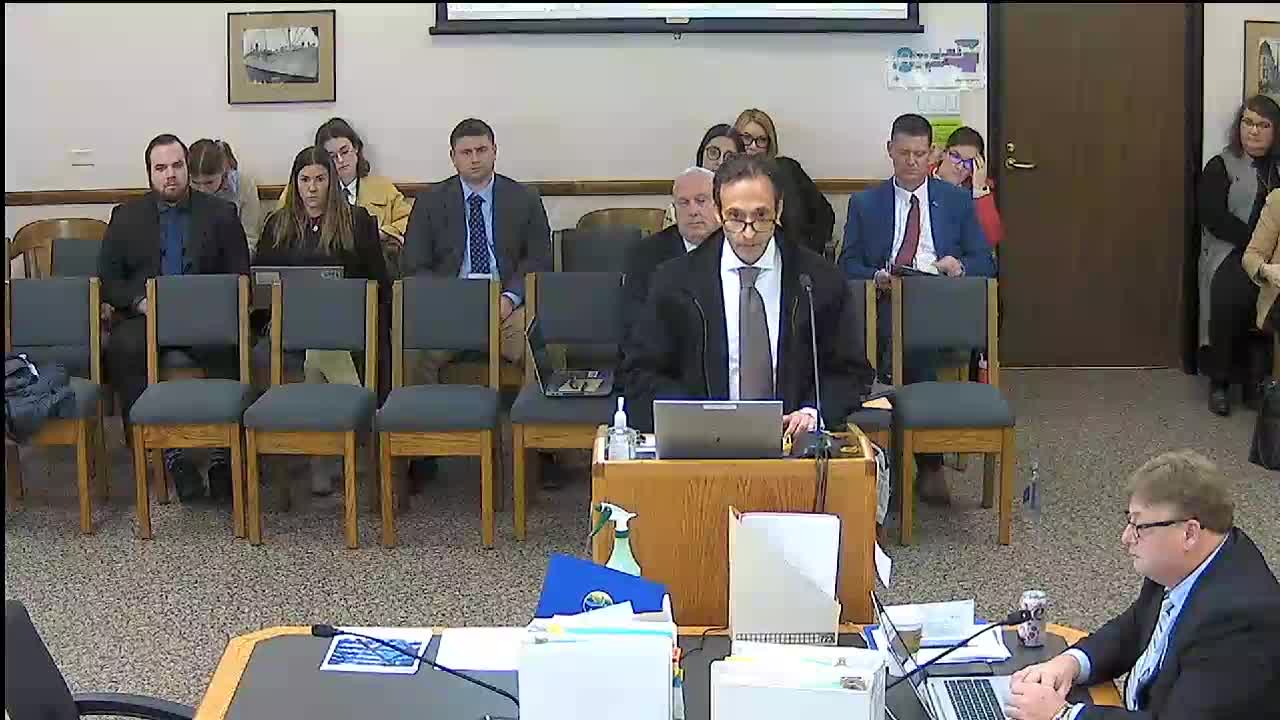
The Legislative Audit and Fiscal Review Committee on an undisclosed date received a presentation from accounting firm Forvis summarizing its performance review of the North Dakota State Auditor’s Office and voted to accept the firm’s draft report.
Forvis partner Chris Ricudo and director Charlie Johnson told the committee their team reviewed the auditor’s work papers, governance, quality-assurance procedures and invoicing practices for work performed during 2020–2023 and performed limited follow-up testing into early 2024 to confirm changes implemented by the auditor’s office. "We identified opportunities for improvement related to communication and invoicing," Johnson said. "The State Auditor's Office implemented new procedures in early 2024 and our testing shows the new process is being followed."
Why it matters: The State Auditor’s Office conducts audits and other reviews of state agencies and many local governments. Clear, consistent invoicing and communications affect local governments' budgeting and trust in the audit process.
Key findings and context
- Overall compliance and quality controls: Forvis found four major areas where the State Auditor’s Office operated in line with expectations for a state audit function, including engagement planning, quality assurance processes, resource monitoring and documentation of audit hours. "We found no issues there," Johnson said.
- Invoicing and communication: Forvis sampled invoices from the 2020–2023 period (25 invoices under the old process) and tested the full population of 19 2024 transactions under the new process. The firm reported that prior to January 2024 some audit invoices and cost proposals lacked sufficient detail or documentation for clients; after January 2024 the office implemented written cost proposals, clearer documentation and formal change processes. "The sampling of the work since January 2024 shows they're following the process and the new changes they put in place," Johnson said.
- Independent public accountant (IPA) review charges: Forvis noted the auditor’s office previously charged for IPA review work. The auditor’s office now does not charge for IPA reviews; Forvis recommended that if charging resumes, the office should use the same documented cost-proposal approach.
- Stakeholder survey: Forvis sent surveys to about 250 identified stakeholders and got a roughly 44% response rate. The survey reinforced concerns about prior communication and invoice clarity; Forvis said surveys were an input to sampling decisions but not the sole basis for conclusions.
State Auditor’s response
State Auditor Josh Gallien told the committee his office had already implemented the invoicing and cost-proposal changes Forvis tested. "The information, the work as you heard, was always done, was always documented," Gallien said, adding the office now provides more detailed invoices and cost proposals and uses change orders signed by clients when scope changes.
Committee action
Representative Wagner moved and Representative Anderson seconded a motion to receive and accept Forvis's report; the committee recorded the motion as approved.
What remains: Forvis planned to finalize a written report after the presentation; the firm and the auditor’s office said they would continue to refine communication and invoice documentation practices. Committee members asked for continued transparency and for the auditor's office to share follow-up results as new processes are used.
Ending
Committee members who questioned the report said they appreciated that Forvis found no "red flags" and welcomed the auditor's office changes but asked for better advance distribution of draft reports in future sessions. Forvis said it performed the engagement in accordance with its engagement letter and with applicable professional standards for performance reviews, and the audit contractor and the auditor's office said they would finalize the report after the committee presentation.