Get Full Government Meeting Transcripts, Videos, & Alerts Forever!
Get email alerts on the Victim Notifications topic
No spam. Unsubscribe anytime.
Corrections seeks change letting victims opt out of automated notifications; attorney general's office urges caution citing Marsy's constitutional rights
Summary
The Department of Corrections proposed changes to victim-notification law to stop sending custodial-movement notices to people who have not registered for automated notification; the Attorney General's Office opposed the change, saying it could undermine Marsy's Law protections and increase risk to victims.
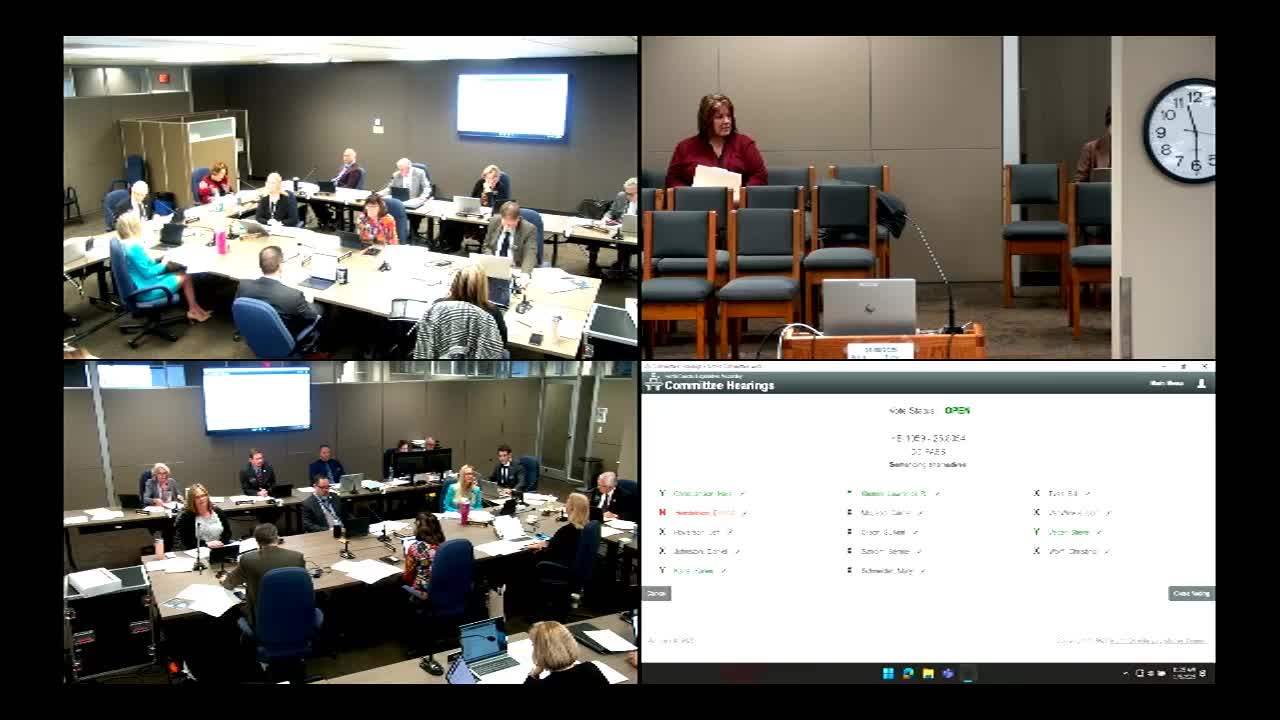
The House Judiciary Committee heard competing views on House Bill 1061, a multi-part amendment to section 12.1‑34‑02 of the North Dakota Century Code that addresses victims' notifications and how custodial authorities provide notice.
Charlie Hedden of the Department of Corrections and Rehabilitation's victim services team said the department seeks three changes: (1) clarify that custodial authorities will provide registration information "when requested" rather than proactively contacting every victim; (2) treat unregistered victims differently so they will not automatically receive the same notices unless they have registered; and (3) add education-release movement to the list of custodial movements for which victims can receive notice. Hedden said victims contacting his team often tell staff the notices retraumatize them; they want the option to receive no communication at all. "We simply ask that we respect their wishes: if they choose to receive that information they register for the communication," Hedden said. He also asked that notices can be given by an "authorized representative," not only the Parole Board or pardon clerk, to reflect current practice.
Heidi Smith, director of the Information Technology and Crime Victim Services division in the Attorney General's Office, testified in opposition. The state SAVN (state automated victim information and notification) system is an automated tool the office runs and that custodial authorities and courts use to notify victims. Smith said inserting "when requested" would place the burden on victims to discover the system and request registration, risking missed notifications about releases, escapes, or critical hearings that Article 1, Section 25 of the North Dakota Constitution (Marsy's Law) guarantees. "If a victim is unaware of the notification system and, as a result of this bill, does not receive information about the system, there is a high potential that they will miss high priority notifications," Smith told the committee. She recommended a do‑not‑pass, arguing SAVN should be a tool that supplements but does not replace direct notifications from custodial authorities, courts or victim-service providers.
Committee members questioned operational issues: whether children who were victims but not registered can later enroll when they become adults; how facilities would handle registration and opt-out requests; and whether automated calls are sufficient for high‑priority notices like escapes or in‑custody deaths. Hedden said victims who become adults can register later and that victim advocates and local coordinators routinely inform victims of registration options. Smith said custodial authorities can and do use SAVN and that administrators can see registration status and provide in‑person notice when appropriate; she argued the statutory language change would remove important safeguards and alternatives.
The committee took testimony but did not vote on the bill at the hearing. The competing testimony — corrections asking for greater deference to victims who do not want notifications versus the Attorney General's Office cautioning that the change could undermine constitutional notice rights — leaves the committee with a policy choice about how actively the state must notify crime victims of custody movements and critical hearings.