Get Full Government Meeting Transcripts, Videos, & Alerts Forever!
Get email alerts on the Ethics Advisory Opinions topic
No spam. Unsubscribe anytime.
Ethics Commission seeks authority to issue advisory opinions on its own initiative; committee amends proposal then rejects bill
Summary
The House Judiciary Committee heard from the North Dakota Ethics Commission on House Bill 1046, which would let the Commission issue written advisory opinions on its own initiative and clarify who may request opinions. Lawmakers amended the threshold for Commission-initiated opinions and ultimately voted a "do not pass."
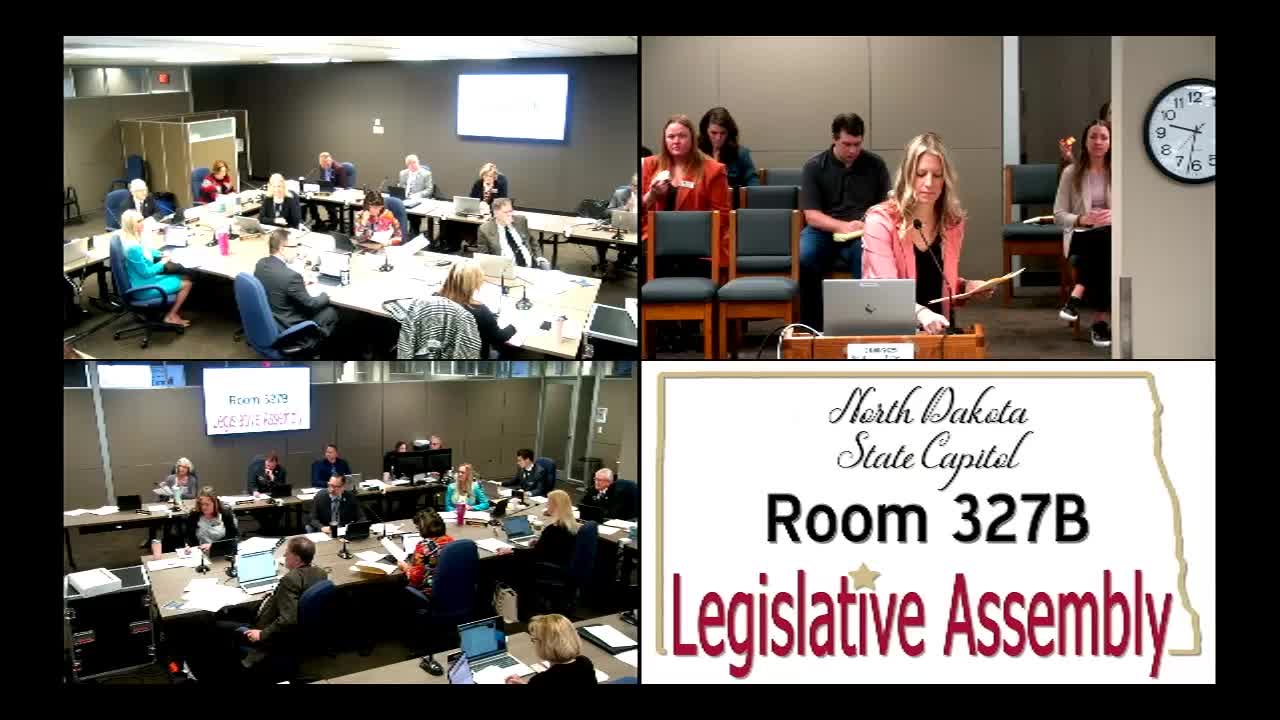
House Judiciary Committee Chairman Lawrence Clamine opened the hearing on House Bill 1046, which would amend section 546.604.2 of the North Dakota Century Code to change how the North Dakota Ethics Commission issues advisory opinions.
The Ethics Commission's executive director, Rebecca Binstock, told the committee the commission was seeking two clarifications: allow the Commission to issue a written advisory opinion "upon the majority vote of the entire Commission" (as drafted) and tighten who may request an opinion so requests are tied to the person whose conduct is at issue or are submitted with authorization when filed on another's behalf. "Advisory opinions," Binstock said, "allow individuals under the Ethics Commission's jurisdiction to submit hypothetical facts or prospective conduct to the Commission for analysis of potential ethical issues under article 14 of the constitution and state statutes and ethics commission rules." She added the Commission has issued four advisory opinions to date and currently has two pending.
Committee members pressed for details. Representative Jeff Hoverson asked whether opinions could address current or past conduct; Binstock replied the commission issues opinions only on prospective or not-yet-completed situations ("the commission can't issue advisory opinions on something that has already happened"). Representative Steve Vetter and others asked why the Ethics Commission introduced the bill itself rather than having a legislator carry it; Binstock said the commission voted to introduce the measures and that agencies are permitted to prefile bills.
Members debated the threshold the Commission should need to issue an opinion on its own. Representative Bernie Satrim moved to require unanimous approval by the entire five-member Commission; that amendment failed on roll call (Yes 6, No 8). A second amendment—requiring a vote of 4 of the 5 commissioners to authorize a Commission-initiated opinion—passed (11–3). The committee then debated the bill itself. Representative Mary Schneider moved a "do pass as amended" motion which failed on roll call. The committee then voted to recommend "do not pass as amended," which carried (13–1). Representative Satrim was designated the bill carrier when the committee disposed of the measure.
The bill text would have codified that advisory opinions are published to the Ethics Commission website and attempted to restrict advisory-opinion requests to hypothetical or prospective facts relating to the requestor, allowing third-party filings only when properly authorized. Several members said they valued advisory opinions as guidance for public officials; others said the change would expand the Commission's power too far. Binstock said the Commission intends a careful, public process (drafting and approvals would occur in open meetings) and emphasized that the amendment requiring four commissioners was intended to prevent hasty action.
The committee closed the hearing after taking the votes. The bill will not be carried out of this committee with a recommendation.