
Businesses and unions back bill creating state apprenticeship office; Department of Labor seeks more review
Get AI-powered insights, summaries, and transcripts
Sign Up Free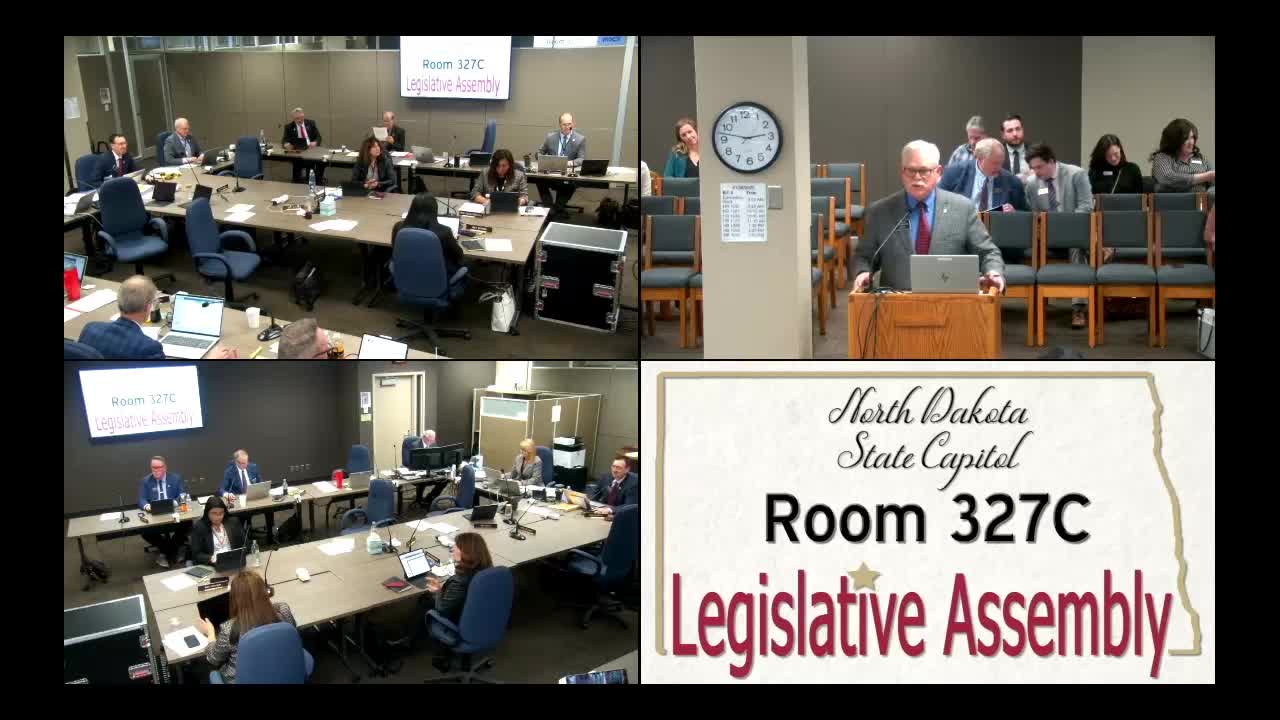
Summary
House Bill 1036 would create a state Office of Apprenticeship in the Department of Labor and Human Rights to help employers create federally recognized apprenticeship programs; business and union representatives supported the bill at committee testimony.
House Bill 1036, proposing a state Office of Apprenticeship jointly staffed with the U.S. Department of Labor’s Office of Apprenticeship functions, drew broad support from business groups and building‑trade representatives at a hearing before the House Industry, Business and Labor Committee.
Senator Mike Wabam, appearing as vice chairman of the interim Workforce Development Committee, said the bill grew from a study group that concluded North Dakota needs more apprenticeship programs and greater state capacity to create and register federally recognized apprenticeships. The measure would place a joint apprenticeship office in the Department of Labor and Human Rights (DOLHR), with staff who would learn from the current federal officeholder — identified in testimony as Barry Dutton — so the state can expand program approvals when demand increases.
Supporters told the committee the change would make it easier for employers to create apprenticeship programs that meet federal criteria. Andrea Fenig, vice president of government affairs for the Greater North Dakota Chamber, told the committee employers often hesitate to create apprenticeship programs because they are unsure of requirements and costs; she said the bill would provide a resource to help employers understand and meet those requirements. Blair Thorson, representing the Finishing Trades Institute of the Upper Midwest and the International Union of Painters and Allied Trades District Council 82, said trades employers and unions face workforce shortages and that a state office could accelerate program development and training capacity, citing other states that have established state apprenticeship offices.
Testimony included a preliminary cost estimate for staffing. Wabam said the proposal was drafted with an estimate of three full‑time positions and an approximate biennial cost of $650,000; he described that figure as an approximation and said the number reflects a supervisory position and two subordinate staffers and that the figure was provided by staff during bill development. He also said the current federal state apprenticeship presence in North Dakota is small (described in testimony as a single federal officeholder), and that officials expect demand to grow if the state expands support for program creation.
Members asked about overlap with other state efforts, marketing, and whether apprenticeship approval is a federal or state action. Wabam said federal recognition of apprenticeship programs remains the approval mechanism, and the bill’s intent is to create state capacity that can prepare and shepherd applications through federal requirements so programs are federally recognized and portable.
Jason Eller (remote) of the North Dakota Building Trades Unions and other trade representatives testified in support, saying multiple sectors beyond construction — including education, aircraft maintenance and manufacturing — could benefit. Thorson and other supporters cited examples of other states (Montana, Idaho, Kansas and Michigan mentioned in testimony) that have created state offices to augment federal apprenticeship workloads.
Zach Greenberg, the interim commissioner of the Department of Labor, requested additional time to consult with department staff and other stakeholders before taking a departmental position; he said initial conversations suggested the possibility that another department might also be an appropriate home for the office and asked for time to review details.
Committee members took no final floor action on the bill at the hearing; the committee closed the public testimony record and recessed. Supporters urged the committee to advance the proposal so employers and educators can more readily build apprenticeship pathways to address workforce shortages.