Get Full Government Meeting Transcripts, Videos, & Alerts Forever!
Get email alerts on the Appraisal Management Companies topic
No spam. Unsubscribe anytime.
Committee advances bill to align state appraisal-management law with federal rules
Summary
The House Industry, Business and Labor Committee recommended a due pass for House Bill 1080, a bill drafted with the North Dakota Appraiser Board to update state law governing appraisal management companies (AMCs) so it aligns with federal rules and Appraisal Subcommittee guidance.
House Bill 1080, a measure to update North Dakota law governing appraisal management companies, received a committee recommendation to pass after testimony from the North Dakota Real Estate Appraiser Qualifications and Ethics Board.
The bill, presented to the House Industry, Business and Labor Committee, would amend statutory language in the state AMC statute to align with federal requirements including Title XI of the Financial Institutions Reform, Recovery, and Enforcement Act (FIRREA) as amended by the Dodd‑Frank Wall Street Reform and Consumer Protection Act and the federal AMC rule, the Appraisal Subcommittee (ASC) review process, and ASC policy guidance.
Corey Cost, chair of the North Dakota Real Estate Appraiser Qualifications and Ethics Board, testified that the board helped draft the changes and supports the bill. He told the committee the changes respond to three areas the ASC identified as noncompliant during its recent review of North Dakota’s AMC program and described five targeted amendments: adding a definition for federally regulated AMCs, clarifying a registration exemption for federally regulated AMCs, disqualifying ownership for anyone whose appraiser credential was revoked or surrendered for substantive reasons, requiring AMCs to submit requested records (changing permissive language to mandatory), and prohibiting AMCs from removing appraisers from panels without prior written notice within the initial period now specified by federal guidance.
Cost said the proposed changes are largely clarifications to bring the statute into compliance with federal minimum requirements and ASC expectations. He noted there are currently two AMCs he believes are under federal oversight and that entities with federal oversight are not required to register with the state. “Because they already have federal oversight they don't want to have duplicative efforts there,” Cost said.
Committee members asked whether the changes would impose new burdens. Cost replied that, in practice, the state has been receiving records when requested and the change from “may” to “shall” is intended to remove ambiguity and meet ASC expectations rather than to address an existing compliance problem. On the removal-of-appraisers issue, Cost said the federal standard does not allow the prior shorter-notice exception the current state statute contains and so the bill would remove the 90‑day allowance now in state law.
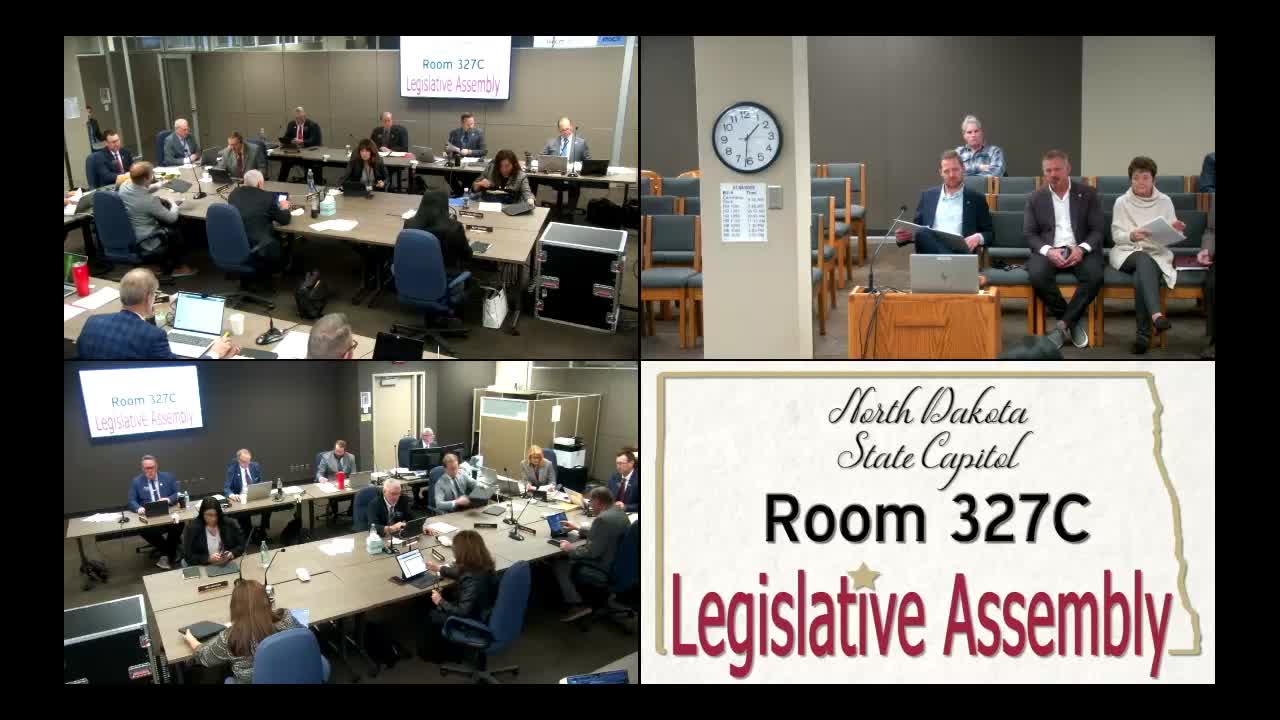
After testimony and questions, Representative Shower moved a due‑pass recommendation. The motion was seconded and, by roll call, the committee approved the bill to advance out of committee.
The committee hearing record shows stakeholders and staff worked with ASC policy managers and appraisal‑industry advocacy groups while drafting the changes. The state board asked the committee for a due pass so the updated language can be enacted to maintain compliance with federal oversight and preserve the state AMC program’s eligibility for federally related transactions.
The committee closed the bill hearing and recessed before proceeding to other agenda items.