Get Full Government Meeting Transcripts, Videos, & Alerts Forever!
Get email alerts on the Medical Education Retention topic
No spam. Unsubscribe anytime.
Health sciences report: WV medical-school enrollments rise; in‑state retention remains low
Summary
Jordan Reed told the commission West Virginia’s three medical schools enrolled 381 first-year students in 2024 (168 in-state); licensure pass rates were at or above 94%, but long-term retention to practice in West Virginia remains limited. The report included grants to academic centers and scholarship/loan-repayment data.
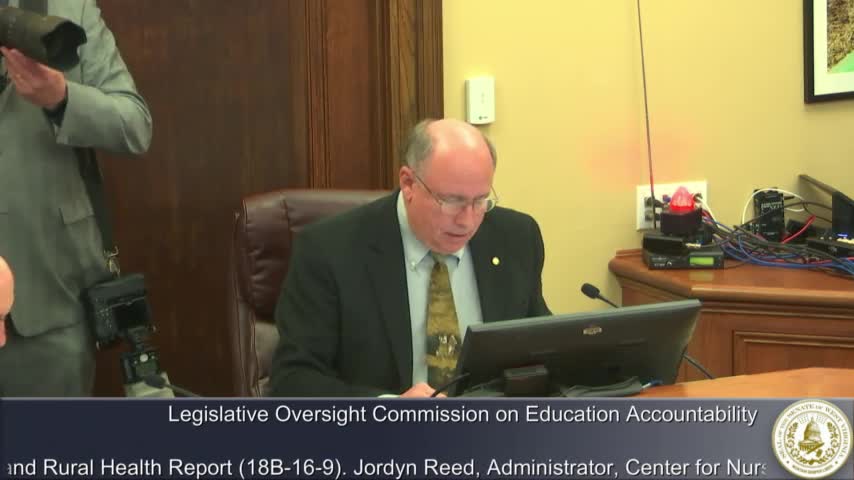
Jordan Reed, administrator of the Center for Nursing at the Higher Education Policy Commission (HEPC) and the Community and Technical College system (CTCC), presented the 2024 Health Sciences Rural Health report to the Legislative Oversight Commission.
Reed said the state’s three medical schools collectively enrolled 381 first-year students in 2024, of whom 168 were in-state residents — an increase of roughly 30 students from the previous year. He told the commission in-state tuition at West Virginia medical schools remains under $35,000 per year and that first-attempt licensure-exam pass rates were at or above 94 percent across the three schools.
The presentation included indebtedness figures for the class of 2024: Reed reported average medical-school indebtedness of about $185,000 at West Virginia University, $189,000 at Marshall University, and $242,000 at the osteopathic school. He said retention to practice in West Virginia for graduates who have completed residency training (graduates from 2014–19 now finished with residency) stood at 22 percent overall, with 12 percent practicing in primary care and 6 percent practicing in rural areas.
Reed noted the site of residency training strongly predicts practice location: 77 percent of physicians who completed in‑state residencies remained in West Virginia to practice, while only 7 percent who completed out-of-state primary-care residencies returned to practice in the state. The report described fiscal-year 2024 grants under the Health Sciences Initiative: Reed said the commission distributed grants of $587,000 to each of the three medical schools to support pipeline and rural-health programming, and the division also awards smaller grants to other higher-education programs, health-care facilities and nonprofits.
The report also covered scholarship and loan-repayment programs managed by the Health Sciences division: the West Virginia nursing scholarship program received 843 applications in the 2023–24 award year (up from 693 the prior year), and the health-sciences service loan-repayment program issued 35 awards totaling $350,000 to mental-health and other health professionals.
During questions, a commissioner asked why Marshall’s reported indebtedness appeared higher; Reed said Marshall recently changed its curriculum structure to include an additional summer term, which he said increased costs for students in that cohort. Reed offered to provide national indebtedness comparisons on request. No committee action was taken on the report.