Get Full Government Meeting Transcripts, Videos, & Alerts Forever!
Get email alerts on the Housing Development Regulations topic
No spam. Unsubscribe anytime.
Coupeville commission reviews economic stability goals and proposed housing code changes, including ADU rules
Summary
At its Jan. 7 meeting, Coupeville Planning Commission discussed updates to the comprehensive plan’s economic stability element and a proposed development-regulation draft that tightens accessory dwelling unit (ADU) size limits, addresses middle-housing forms, and sets a timetable for public hearings in February and March.
Coupeville Planning Commission members spent the Jan. 7 meeting reviewing updates to the town’s economic stability element and a draft overhaul of development regulations that would change how accessory dwelling units (ADUs) and middle-housing types are allowed.
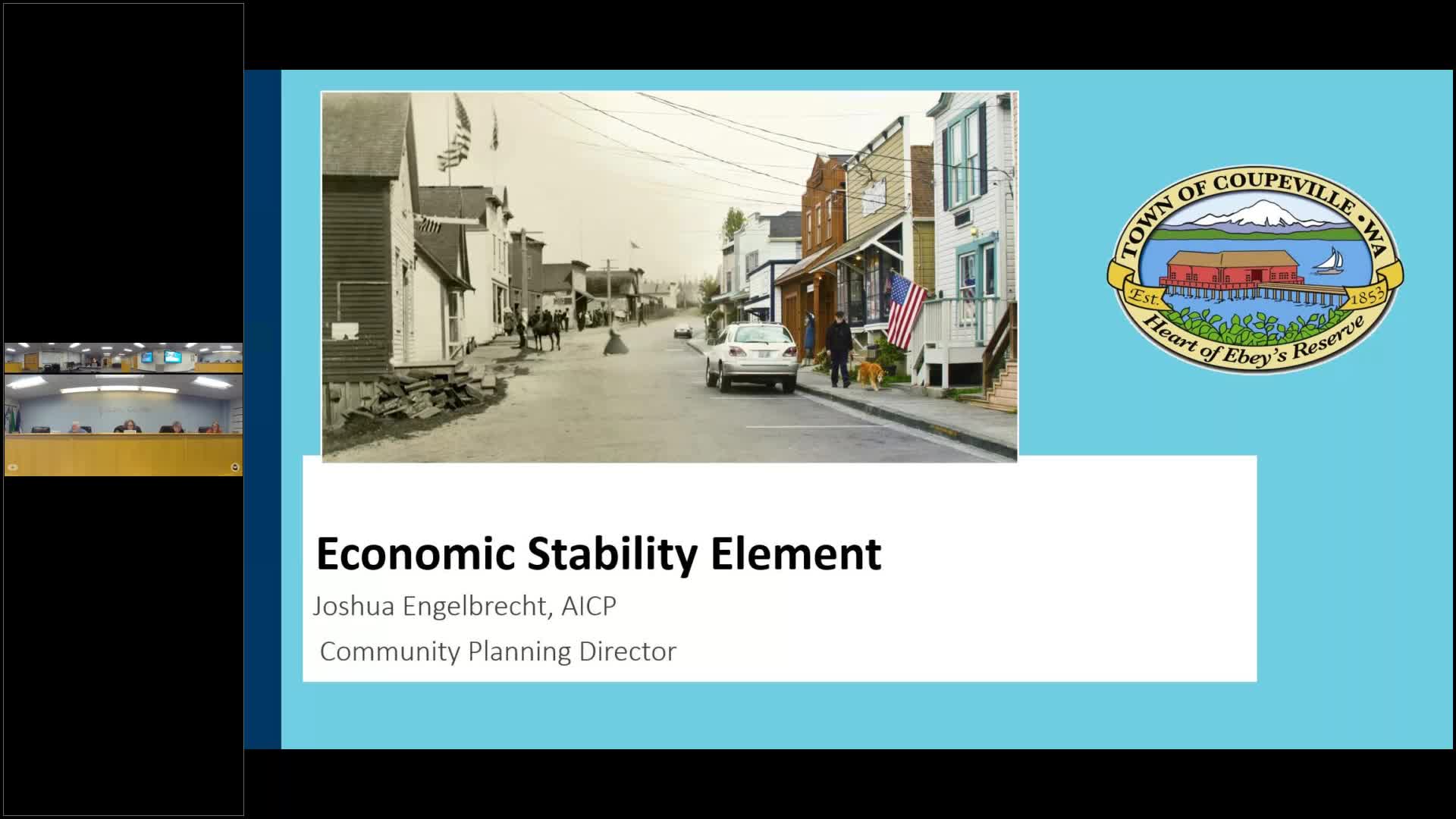
The commission heard a presentation from Joshua, planning staff, who outlined broad goals including encouraging compatible businesses, promoting year-round tourism, and supporting workforce opportunities such as childcare and coworking. Joshua said the proposed code updates reflect state law changes and recent local data, and include a reduction in the proposed maximum size for a detached ADU from 1,200 to 1,000 square feet and other adjustments to middle-housing allowances.
The code-update discussion focused on how new state statutes interact with local rules. Commissioner Caroline raised questions about RCW 36.70A.110, which addresses urban growth areas, and whether the town’s exemption from some Growth Management Act provisions affects local authority over forms and ownership of new housing. Caroline asked, “RCW 36.70A.110 ... which is the comprehensive plans urban growth areas,” and pressed staff on what limits remain for the town.
Commissioners and public commenters debated the likely effects of unit-lot and similar condominium-style conversions tied to ADUs, including whether ADUs could be sold separately from a lot and whether sales would produce second homes rather than year-round housing for local workers. One commissioner summarized the local concern: if ADUs are expensive to build, they may be developed only by wealthier owners and then sold as weekend or second homes rather than affordable housing for employees.
Several participants proposed practical steps the town could take alongside code changes. Suggestions included (1) pursuing partnerships with Habitat for Humanity or a land trust to build permanently affordable ADUs on private lots, (2) offering fee waivers or property-tax credits as incentives when owners provide a lot for an affordable unit, and (3) exploring a vacancy tax or similar tool to discourage units held primarily as second homes. Joshua described these as programmatic possibilities that could accompany regulatory changes but noted legal and practical limits under state law.
On process and timeline, staff said the draft code revision work has a consultant budget of about $40,000, aims to return revisions to council on Jan. 14, begin state review and environmental notification in January, open a public hearing at the Feb. 4 planning-commission meeting, and, if needed, close the hearing in March before town-council consideration in mid-March.
Other topics discussed in the economic-stability segment included sustainable tourism and seasonal retail patterns, pedestrian access and parking downtown, restroom availability at the waterfront and parking areas, and the use of town-owned parcels for community priorities such as childcare or affordable housing. A resident noted recurring parking and sidewalk conflicts downtown and said, “Bathrooms are definitely better,” during a discussion of restroom access.
No formal action was taken on the code draft at the Jan. 7 meeting; commissioners asked staff to incorporate the comments and return with revised language and a public-hearing schedule. Staff encouraged members of the public to submit written comments before the scheduled public hearing.
Ending: The commission adjourned after the discussion and directed staff to return a revised draft and the proposed hearing schedule for February and March.