Get Full Government Meeting Transcripts, Videos, & Alerts Forever!
Get email alerts on the Homelessness Housing Support topic
No spam. Unsubscribe anytime.
Council moves interim step-housing rules to consent after debate on guardrails and parking
Summary
Edmonds councilors voted 4-3 to place an interim ordinance allowing permanent supportive housing, transitional housing and indoor emergency shelters into next week's consent agenda, while directing staff to return with further guardrails and outreach.
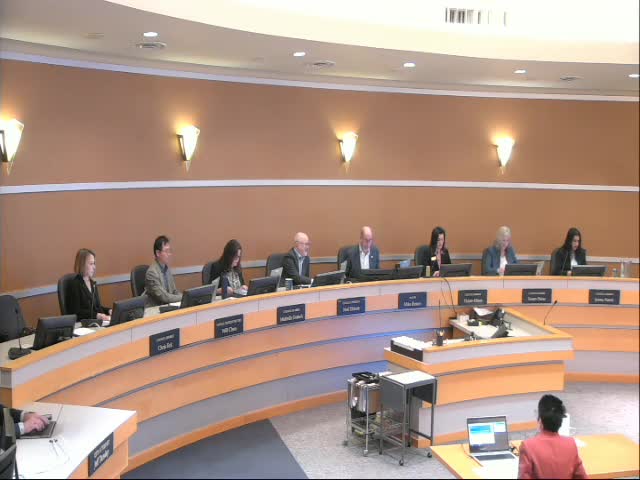
The Edmonds City Council on Jan. 7 voted 4-3 to move an interim ordinance addressing permanent supportive housing, transitional housing, emergency housing and indoor emergency shelters to next week's consent agenda for final action.
Planning Director Shane Hope told the council the measure is intended to satisfy state law requiring cities to allow certain forms of "step housing" in zones that permit residential uses or hotels, and to provide a regulatory pathway so nonprofits and providers can pursue projects. "Our job is to provide the ability for people to do that by having regulations that allow for it," Hope said.
Under the interim draft, "permanent supportive housing" and "transitional housing" would be permitted in zones that allow residential units or hotels. Indoor emergency shelters and indoor emergency housing would be permitted where hotels are allowed (commercial waterfront, community business, downtown business and general commercial zones). The ordinance does not regulate outdoor encampments, which remain governed by separate code.
Council debate focused on enforcement and local control, potential "no-barrier" shelter models, and whether parking minimums could become barriers to building step housing. Council President Tippett said he supported the concept but sought guardrails for no-barrier models after recounting examples where operator rules made a difference in neighborhood outcomes. Council member Chris Payne urged staff to prioritize removing regulatory barriers such as parking minimums for projects that serve households at 02480% AMI.
City Attorney advised the council the interim ordinance itself would not supply funding for projects; most permanent supportive housing is only feasible with subsidies or nonprofit operator support. Several councilors said implementation details and enforcement plans should be developed during the outreach and planning-board review.
After debate, the council voted 4-3 to place the interim ordinance on the next meeting27s consent agenda and to direct staff to return with additional recommended guardrails and outreach. The motion was framed as a procedural step to allow a public hearing within the 60-day window required for interim ordinances.
Next steps: If moved from consent to adoption, the city will hold a public hearing, pursue community outreach and return with a longer-term ordinance and any recommended enforcement or operating conditions. Staff said parking and other technical standards will be reviewed with state law and potential incentives in mind.
Votes at a glance: Motion to move the interim step-housing ordinance to next meeting's consent agenda passed 4-3.