Get Full Government Meeting Transcripts, Videos, & Alerts Forever!
Get email alerts on the Federal Funding topic
No spam. Unsubscribe anytime.
Longview reviews draft 2025 federal agenda; $1.1M reservoir line listed as pending
Summary
Federal lobbyists reviewed Longview City’s draft 2025 federal legislative agenda at a Jan. 9 workshop, outlining pending congressional directed spending for water infrastructure and other projects and warning of political uncertainties in Washington that could affect timing and scope.
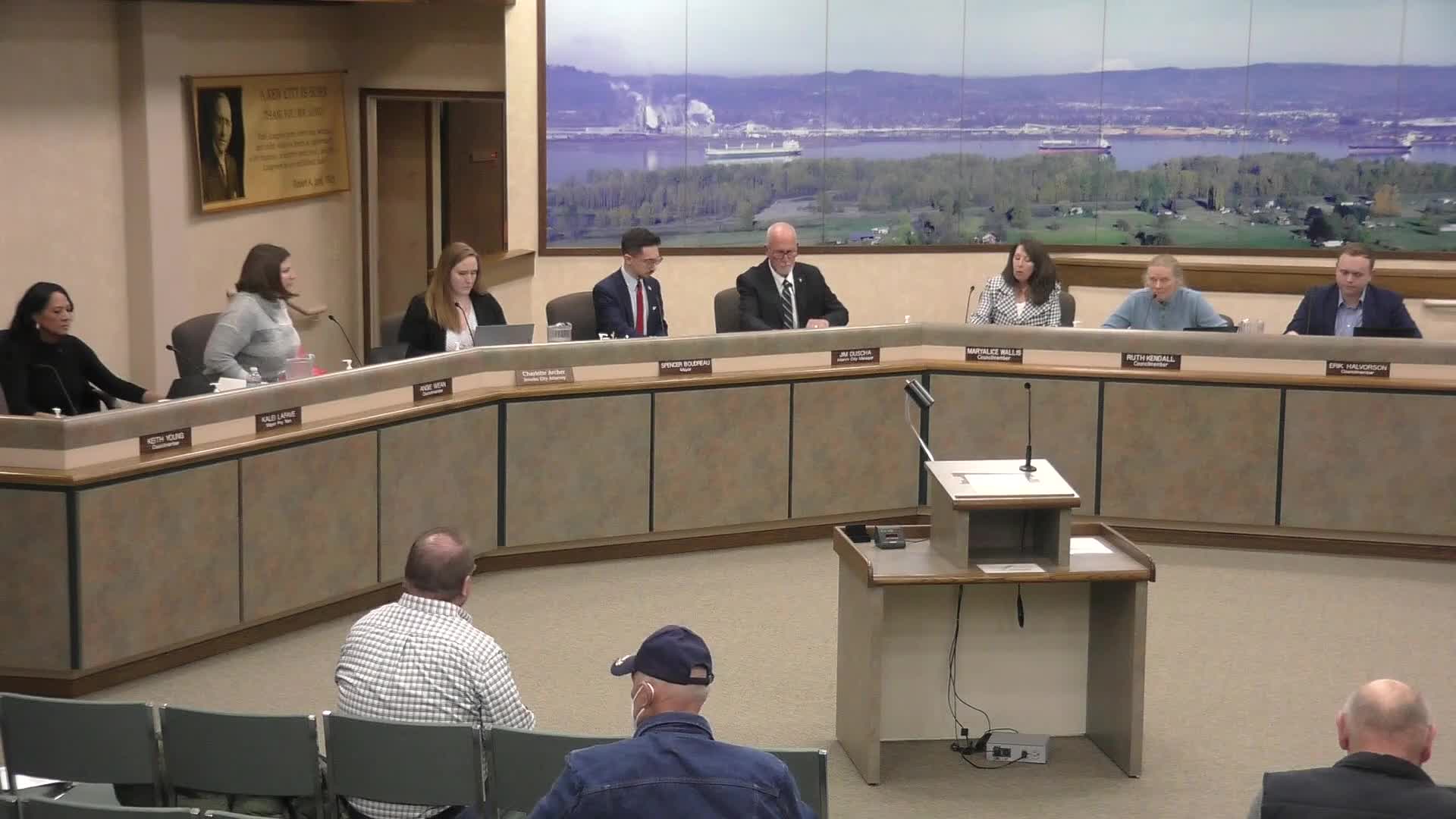
Longview City Council heard a presentation Jan. 9 from Joel Rubin of CFM Advocates on a draft 2025 federal legislative agenda that lists a mix of pending congressional-directed spending requests, grant priorities and policy items the city will pursue in Washington, D.C.
Rubin told the council the document is a work in progress, and highlighted a pending $1,100,000 congressional directed spending request for a dedicated fill line to the city reservoir as one of the projects most likely to see funding if Congress completes appropriations. "We anticipate those bills will be finalized by March 14th this year," Rubin said.
Why it matters: The agenda bundles projects meant to position Longview for federal grants and earmarks that could reduce local capital costs for water, transportation and public-safety projects. Rubin emphasized past successes — $6.8 million returned to the city through congressional delegation efforts across recent cycles — and said the city can build on that record if priorities are refined now.
Details and local priority items: Rubin summarized items the city has pursued or prioritized: - $1,100,000 pending congressional-directed spending (CDS) for a dedicated fill line to the reservoir (listed as pending in appropriations); - A congressionally approved $5,500,000 project cited for Columbia Heights and a de-escalation training simulator (described as previously secured for a related project); - Past allocations and grant wins supporting Beach Street Extension, bus replacements, a fire station, domestic-violence prevention programs, firefighter hiring and a downtown streetscape project; - Ongoing protection and advocacy for federal programs important to Longview such as Community Development Block Grant (CDBG) and HOME formula funds and the alternative fuels tax credit for transit buses.
Rubin also discussed policy-level issues that could affect funding windows, including the timing of FY2025 appropriations and broader fiscal negotiations in Congress. "With only a slim majority in each chamber, there are a lot of moving parts — it will be interesting to watch what these next 100 days look like in Congress," he said, noting that some appropriations work could require bipartisan support and that the March 14 appropriations timeline is important for the city’s pending requests.
Council questions and staff follow-up: Council members asked about specific projects on the draft list. On the Beech Street box culverts, Rubin said the project was a stretch for the funding source used previously because it was not yet close enough to construction; he recommended pursuing planning or design funding (roughly $2–$3 million) to get the project shovel-ready and improve competitiveness for federal construction dollars. He also said Hope Village (a local transitional housing effort discussed by council) could be a fit for certain Department of Housing funding if the structures are or could become permanent; temporary plastic shelters, he said, are not eligible under the federal housing program being discussed.
Next steps: Rubin asked the council and staff to finalize priorities in late January or early February so his firm can brief congressional staff and prepare any congressional-directed spending requests when solicitations open. He said an outreach and design push now — for example funding to advance designs to 30% — would improve prospects for later construction-level federal support.
Ending: Council members and staff indicated they will refine the draft agenda and consider adding one or two projects for lobbying; Rubin and his colleagues said they will support briefings with congressional offices in Washington and local staff tours when material is ready.