
House education committee hears primer on Vermont school governance, supervisory unions and district types
Get AI-powered insights, summaries, and transcripts
Subscribe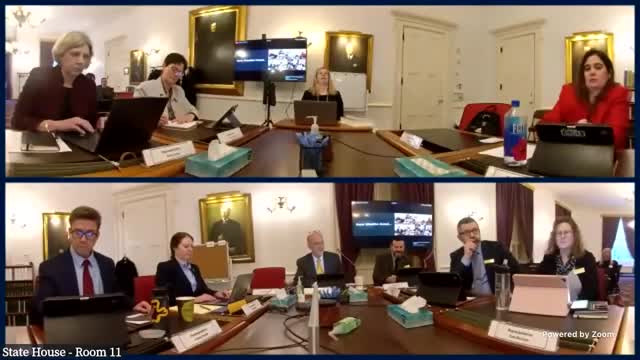
Summary
Legislative Council staff briefed the House Education Committee on how Vermont’s supervisory unions and school districts are structured, their legal powers, and how services and taxes are allocated.
Legislative Council staff briefed the Vermont House Education Committee on the organization and legal differences between supervisory unions and school districts, describing who sets curriculum, who levies taxes and how special education and tuitioning commonly work.
The briefing, delivered by the Legislative Council’s education policy attorney, outlined the practical distinction the law draws between supervisory unions — administrative and service units that do not have taxing authority — and school districts, which are municipal entities with the power to tax and set local educational policy. The attorney said, “Supervisory unions are administrative, planning, and educational service units created by the state board. SUs are not municipalities. They do not have taxing capacity.”
Committee members heard why the distinction matters: supervisory unions typically receive and disburse state and federal funds, provide special-education services and centralize procurement, professional development and transportation, while school districts vote school budgets and can levy taxes. The presenter said supervisory unions are the usual local education agency for federal special-education purposes in Vermont and that many services commonly described as “district” functions are performed at the SU level.
The presentation described the variety of district types that exist under Title 16 of the Vermont statutes: town school districts, union elementary and union high school districts, unified union school districts (which cover pre-K–12 across member towns), modified union districts (a product of case law regarding board representation), nonoperational districts that tuition all students elsewhere, and interstate districts formed by compact. The presenter noted legal citations to Title 16 and directed members to statute for the detailed list of powers and duties.
Committee members from multiple regions described how those structures function in practice in their towns: some unified districts operate all local schools under a single board and tax rate, while other communities are members of supervisory unions that provide centralized services and where individual towns or small districts still retain local boards. Lawmakers asked about funding apportionment, representation on SU boards and how the state board’s statutory authority over SU boundaries interacts with the legislature’s power to change municipal delegation.
On governance change, the attorney said the state board currently has authority to form and modify supervisory-union boundaries but reminded the legislators that, under Vermont’s approach to municipal powers, the legislature could alter that delegation of authority by statute. Members discussed prior consolidation efforts under Act 46 and asked how changes would affect hiring, superintendent roles and labor issues; the presenter emphasized that changes to structure would require significant edits to Title 16 and that labor and employment questions would involve additional legal review.
Committee members also discussed the town tuition program and approved independent schools. The presenter said districts that tuition students may send them to public or approved independent schools and that the town or district typically pays a state–announced tuition rate; families or towns may bear costs above that rate if they choose higher-cost private options.
The session closed with the committee planning additional, more detailed briefings (including finance, school construction and labor-law implications), and a scheduled follow-up presentation from the Agency of Education.